MMA concussion: when can I return to sparring?
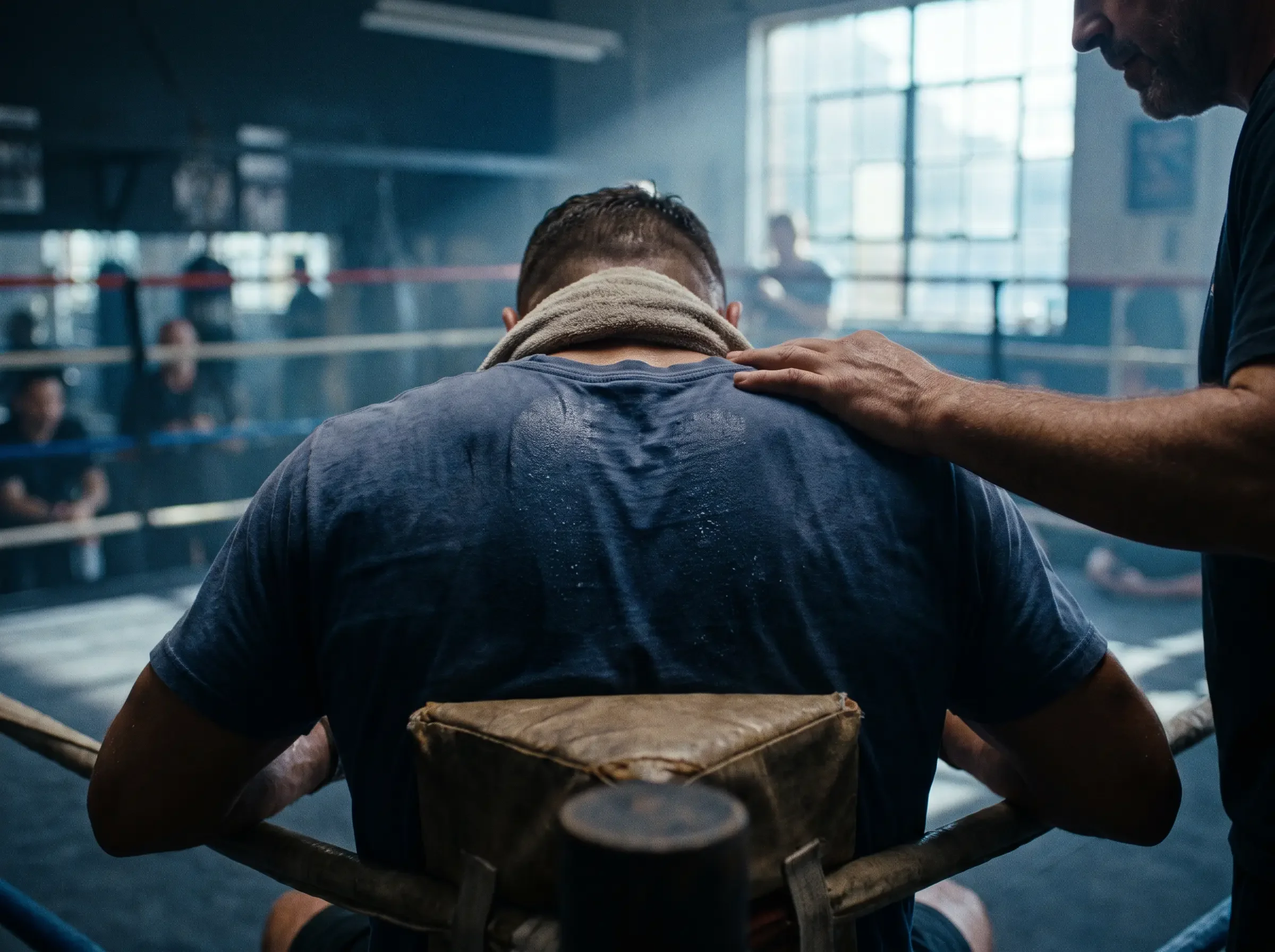
Concussion needs a different approach to every other injury in MMA. A shoulder can be tested with a strength measurement and a knee with a hop test. There is no equivalent number that tells you a brain has finished recovering.
So the return to sparring runs on a staged protocol with symptom checks at every step, a medical clearance before contact comes back, and in Victoria, a minimum stand-down period written into the rules.
Medical Disclaimer: The information in this blog is intended for general educational purposes only and does not constitute medical advice. It is not a substitute for professional assessment, diagnosis, or treatment by a qualified health practitioner. If you are experiencing pain, have sustained an injury, or are unsure whether it is safe to continue training, seek assessment from a qualified physiotherapist or medical professional.
What a concussion actually is
A concussion is a functional brain injury. Nothing shows up on a standard scan, because the problem is in how the brain is processing information, regulating energy and handling load rather than in its structure.
Common symptoms are headache, brain fog, sensitivity to light and noise, balance problems, neck pain, irritability and disrupted sleep. Loss of consciousness happens in a minority of concussions, so being knocked down and getting straight back up rules nothing out.
Current guidance has moved away from sitting in a dark room. Relative rest applies for the first 24-48 hours, and after that, light activity that stays under your symptom threshold is part of the recovery rather than a risk to it.
The graduated return to sparring, stage by stage
Six stages, each requiring a minimum of 24 hours symptom-free before you move up. Any return of symptoms means dropping back to the previous stage and building again.
Stage 1. Symptom-limited activity. Daily activities that don't bring symptoms on. No training.
Stage 2. Light aerobic work. Walking, stationary bike, easy swimming. Kept below the intensity that provokes symptoms. No resistance, no head movement, no impact risk.
Stage 3. Sport-specific movement, no contact. Footwork, movement patterns, shadow boxing. No sparring, no drilling with a partner, no rotational work at intensity.
Stage 4. Non-contact training. Technical drilling, pad work at controlled intensity, resistance training. Still nothing that puts force through the head.
Stage 5. Full contact practice. Return to sparring under supervision at controlled intensity. This stage is the one that requires medical clearance first. It is not a call you or your coach makes on how you're feeling.
Stage 6. Return to competition.
What the Victorian rules require
If you compete in professional contests in Victoria, this is not advisory. The Professional Boxing and Combat Sports Board sets minimum non-fight periods, and they are specific.
A contestant with a diagnosed or suspected concussion must stay out of competition for at least 37 days and out of contact sparring for at least 30 days. Medical clearance from a medical practitioner confirming recovery has to be provided to the Board before contact training or sparring resumes. Where concussions happen in succession, the stand-down period gets longer, and the Board publishes graduated return frameworks at 37, 60 and 90 days to match. The current requirements sit on the Victorian Government combat sports page.
Train at a gym without competing professionally and none of that is legally binding on you. It's still the most useful benchmark available, because it was written for exactly your sport by people looking at exactly this injury. Thirty days before contact sparring is a reasonable floor to hold yourself to whether or not anyone is checking.
Why MMA makes concussion harder to manage than most sports
Standard concussion protocols were built around field sports, and MMA adds three problems they weren't designed for.
Head acceleration turns up earlier than you'd expect. Even non-contact drilling involves head movement, rotation and quick direction changes that can provoke symptoms well before anyone throws a strike.
Grappling loads the head and neck without any impact at all. Isometric neck loading in a headlock, pressure through the head in side control, being stacked in guard. Athletes reintroduce grappling thinking it's the safe option and find symptoms come straight back.
And symptoms get underreported. A fighter with a camp booked, a card date locked in and money on the line has an obvious reason to say they feel fine. The protocol exists partly because self-report on its own isn't reliable under those conditions.
What a physio does in concussion recovery
Clearance to return to contact is a medical decision, and it sits with a doctor. Physiotherapy handles the part in between.
A lot of persisting post-concussion symptoms come from the neck and the balance system rather than the brain injury itself, because the force that caused the concussion went through the cervical spine on the way. Assessment covers cervical spine function, vestibular and balance testing, eye movement control, and exertion tolerance, which means finding the intensity at which symptoms start and using it to set a training ceiling that moves as you improve.
Practically, that gives you a number to train under instead of guessing, and a structured way to progress through the stages rather than sitting still and hoping.
When to get assessed
Any suspected concussion warrants assessment by a health professional before you go anywhere near contact training. Most concussions in otherwise healthy adults settle within 2-4 weeks. Symptoms that are still there past 4 weeks warrant further medical assessment, including neurological input where indicated.
Get seen the same day if there's worsening headache, repeated vomiting, seizure activity, weakness or numbness, slurred speech, unusual drowsiness or increasing confusion. Those are emergency department signs, not physio signs.
Common questions
I felt fine after a few days, can I go back to sparring?
Feeling fine is encouraging and it isn't clearance. The staged return exists because a second head impact before the first injury has resolved carries a much higher risk of a prolonged recovery, and in rare cases something considerably worse. The protocol runs regardless of how good a day you're having.
How long does concussion recovery usually take?
Most adults settle within 2-4 weeks. A history of previous concussions, a heavier initial presentation, or neck and vestibular symptoms alongside the head injury can extend that. Note that recovery and eligibility are separate things. Feeling recovered at 3 weeks doesn't shorten a 30 day stand-down.
Does concussion mean stopping strength training?
Only in the early stages, and only for what provokes symptoms. Once you're symptom-free at rest, light aerobic work starts, and resistance training without head loading typically comes back at stage 4. Sitting completely still for a month is neither necessary nor helpful.
Do the Victorian stand-down periods apply if I don't compete?
Legally, no. They apply to registered contestants in professional contests. They're still the closest thing the sport has to an agreed safe minimum, and the reasoning behind them applies to your brain the same way it applies to a professional's.
Do I need a referral to see a physio for an MMA injury?
No. Physiotherapists are first-contact practitioners in Australia, so you can book directly without a GP referral. You only need one if you are claiming through a Medicare care plan, DVA, or a workplace scheme.
Related reading
Combat Sports Consulting is a combat sports physio practice in Moonee Ponds, Melbourne, working with fighters in the clinic and online anywhere in Australia. There's more on how we work with mixed martial artists on the MMA physio page.
If you are coming back from a head knock and you are not sure what is safe to train, book an initial consult. It is a free 15-minute call, no cost and no obligation, to work out whether we are the right fit and what your next step should be.