
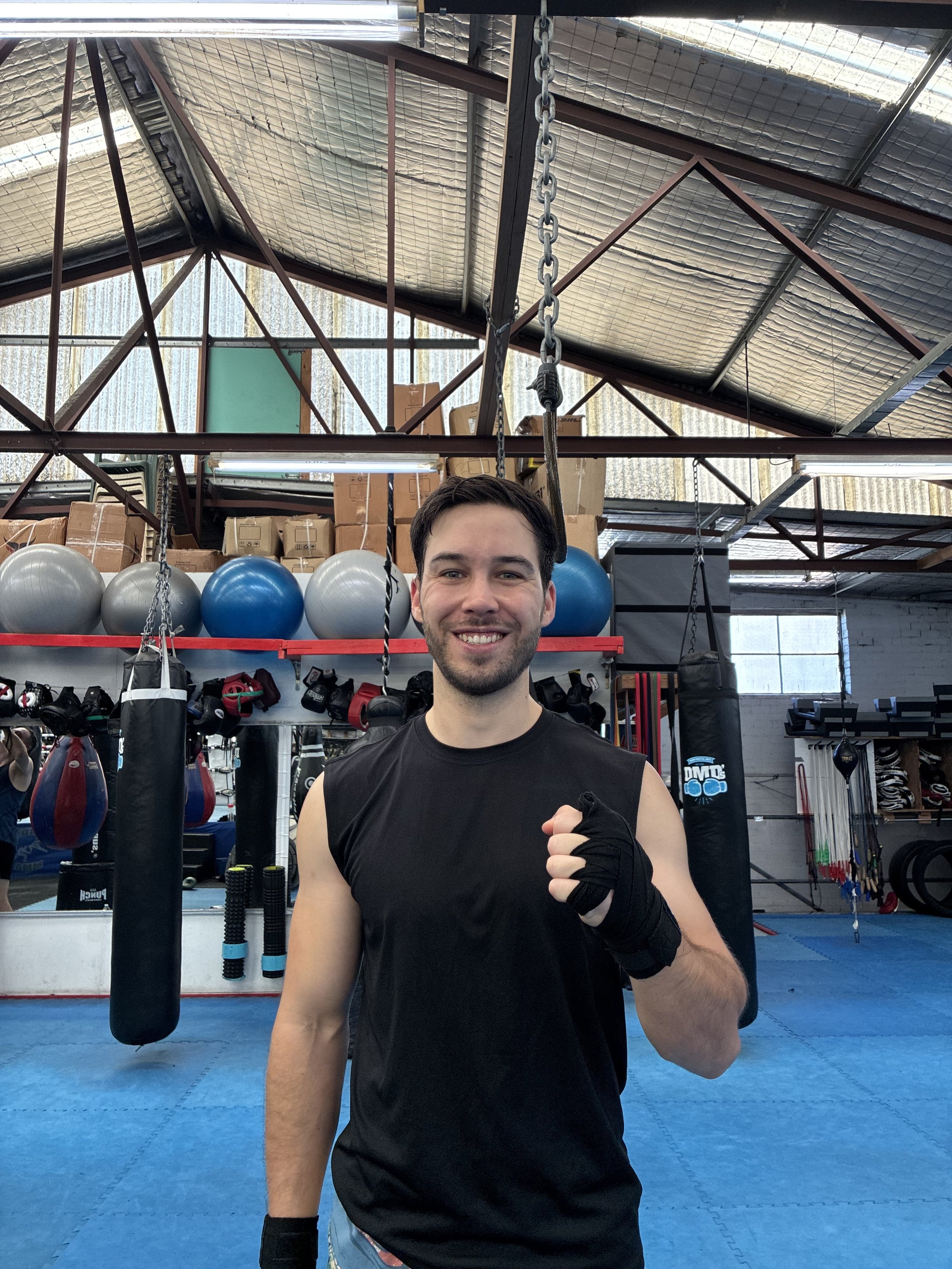
Tom Yeung
Combat sports physiotherapist
in Melbourne
AHPRA registered, Masters qualified, and training combat sports himself.
Injury rehab built around what the sport actually asks of you.
I didn't grow up in combat sports.
For most of my life I was told to stay away from them. ‘‘Too dangerous’’. ‘‘You'll get hurt.” “You'll do lasting damage’’.
After I retired from another sport, I walked into a combat gym and fell in love with it almost immediately. The discipline, the skill, the humility, the respect. Nothing like what I'd been told.
But my body wasn't prepared for the demands. I developed hip pain, foot pain, and shin pain. My body simply hadn't adapted to the new movement patterns and loading that combat sports require.
That experience changed the way I think about this work. I knew what the textbook said about hip pain. What I wanted to know was when I could train again, and what I could safely do in the meantime.
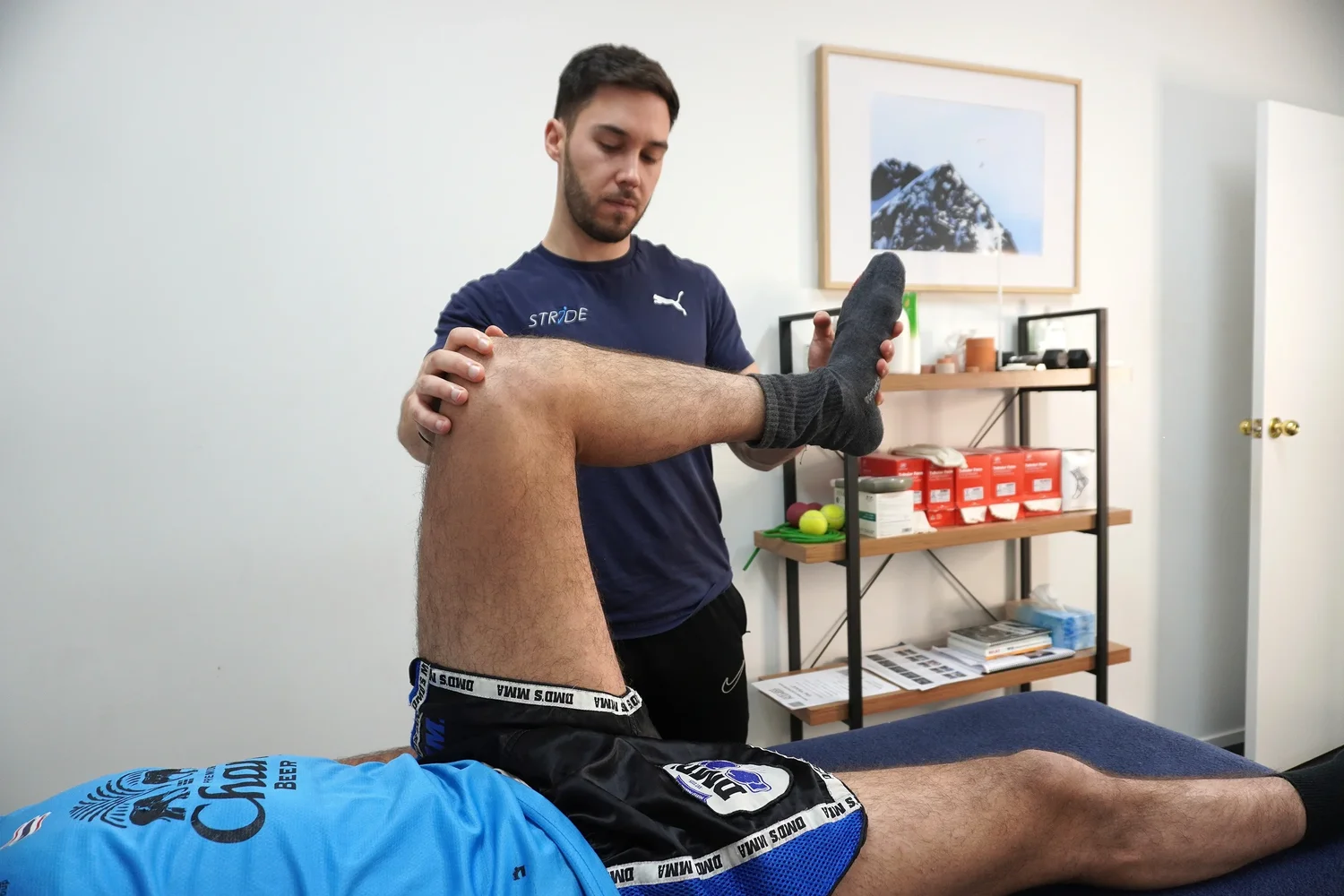
Tom Yeung
Background
- Bachelor of Applied Science
- Master of Physiotherapy Practice
- 7+ years of clinical experience across team sports and combat sports rehabilitation
- Currently completing APA Titling in Sports and Exercise Physiotherapy (experiential pathway)
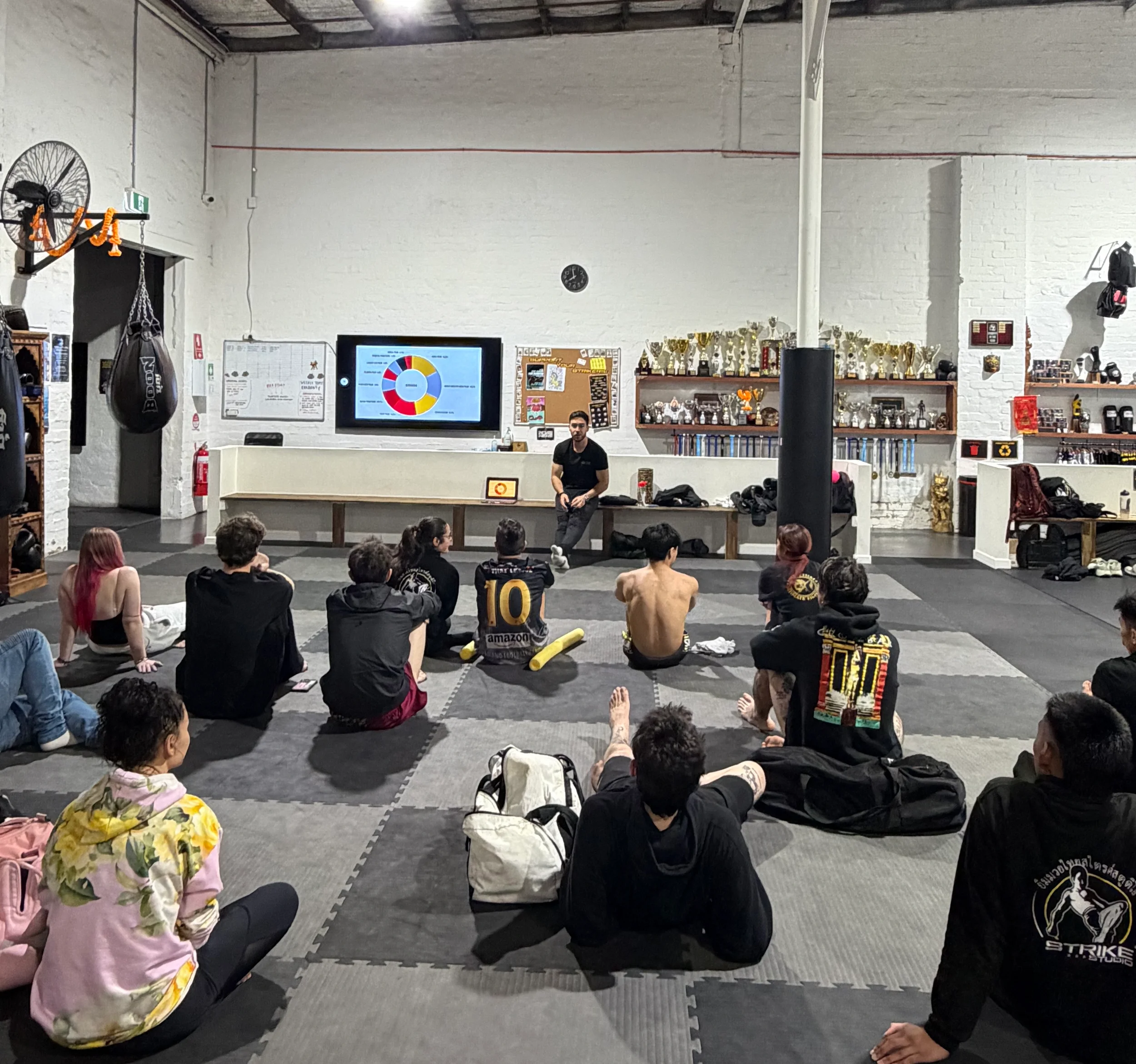
- Runs injury education seminars for combat sports gyms
- Active combat sports athlete
AHPRA Registration
PHY0002241229
Registered Physiotherapist
APA Member
#67013
Australian Physiotherapy Association
Both are publicly verifiable on the AHPRA register of practitioners.
In-clinic in Moonee Ponds, or online across Australia.

The gap I kept seeing
As a physiotherapist working in team sports, something became obvious quickly.
Working in team sports, I saw how injury management gets resourced at the top level. Club medical staff. Structured return-to-play protocols. Rehab built around the specific demands of the game. Combat sports don't have that infrastructure. From the hobbyist through to most professionals, fighters train without any of it.
Combat sports ask for things a pain score can't measure. Absorbing a checked kick. Defending a takedown on a shoulder that's still healing. Holding guard for five minutes with a rib that grumbles. Getting punched in the head, on purpose, by someone who's good at it.
You can be pain-free at rest and still be a long way from any of that.
That's the gap. It sits between the day an injury stops hurting and the day your body can handle a hard round.
Most fighters have felt it. The injury settles, you go back, and something isn't right.
Closing that gap is the whole point of Combat Sports Consulting. Your plan gets built against what your training actually asks: the ranges you fight in, the positions you get put in, the loads you take, and the criteria you have to hit before you're cleared back into each one.
What I Believe
Fighters deserve rehab as structured and evidence-based as anything a club medical department provides. That's the standard this practice is built to.
That means understanding the actual demands of BJJ, Muay Thai, MMA, and boxing. The submissions, the takedowns, the clinch, the striking volume. Then building rehabilitation around those demands.
It means a staged roadmap with objective criteria at every phase, so you always know where you are and what has to happen before the next step.
And it means keeping you in the gym wherever it's safe to do so. 12 weeks off the mats is a long time to lose.
That structure has a name. The Combat Ready System runs in four phases, Assess, Rebuild, Return and Perform, and you can see how it works on the combat sports physio hub.
Where to next
Rehab plans by sport
For the full picture of how injury rehab works here, start at the combat sports physio hub. Or go straight to your sport.
Frequently Asked Questions
-
A physiotherapy service built for combat athletes. Tom Yeung works with BJJ, MMA, boxing and Muay Thai athletes on injury rehab and return to training, in-clinic in Moonee Ponds and online across Australia.
-
A Bachelor of Applied Science and a Master of Physiotherapy Practice, plus 7 years of clinical experience across team sports and combat sports rehabilitation. He is a registered physiotherapist with AHPRA (PHY0002241229) and a member of the Australian Physiotherapy Association (APA #67013). He is currently completing APA Titling in Sports and Exercise Physiotherapy through the experiential pathway.
-
Yes. Tom holds current general registration as a physiotherapist with the Australian Health Practitioner Regulation Agency, registration number PHY0002241229. You can verify this on the AHPRA public register.
-
Yes. He came to combat sports after retiring from another sport and still trains. He also worked through his own hip, foot and shin injuries during that transition, which is part of why the rehab is built the way it is.
-
In-person appointments are available at 13-15 Puckle Street, Moonee Ponds VIC 3039, through our partner clinic Stride Physiotherapy. Online consultations are available for combat athletes anywhere in Australia.
-
Yes. Private health extras can be claimed on the day if your policy includes physiotherapy. Rebates vary, so check your level of cover with your insurer. GP care plans are also accepted.
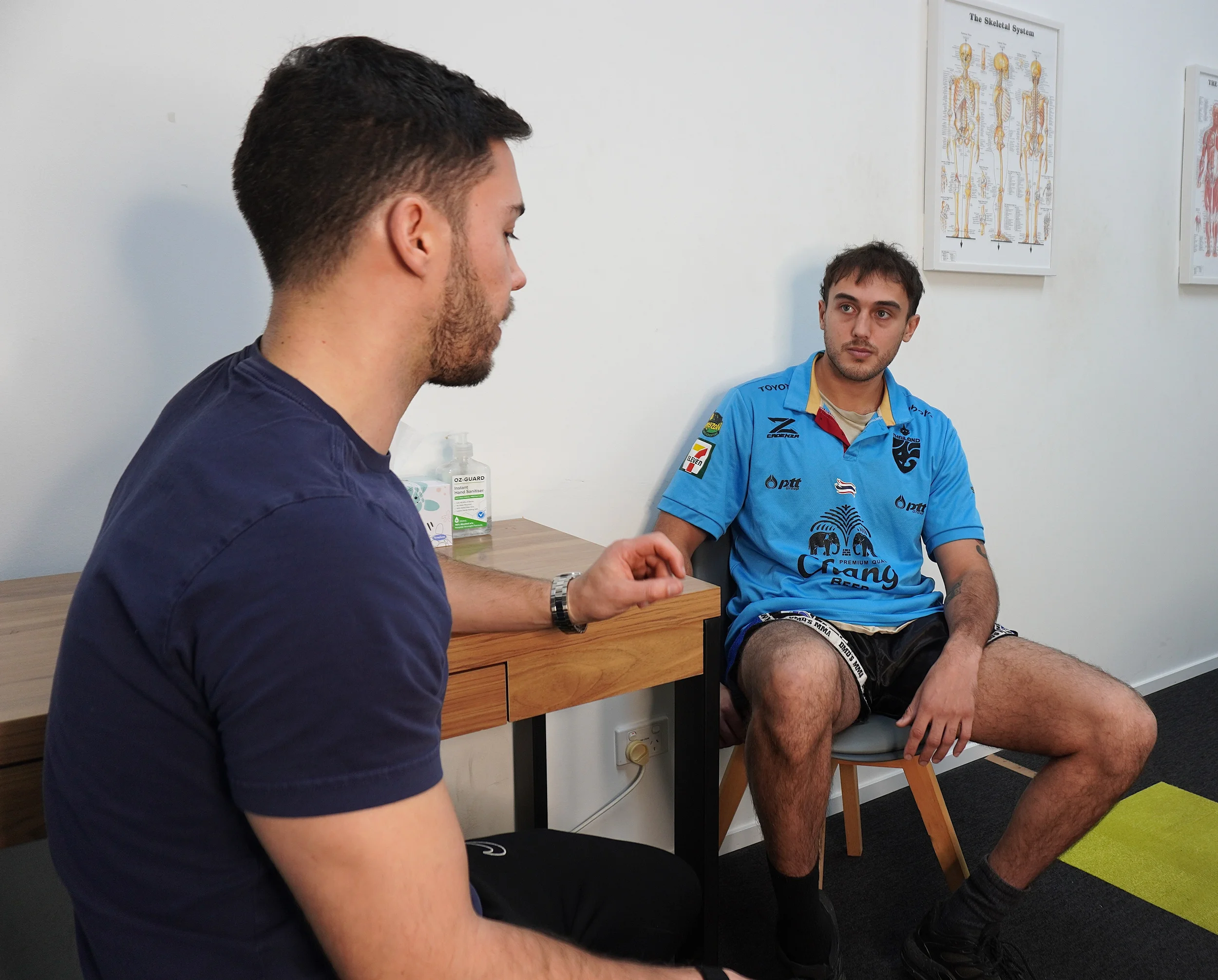
Work with Tom
In-person consultations run from the clinic in Moonee Ponds.
Online rehab is available for combat athletes anywhere in Australia.