Pain-free vs roll-ready: why your physio's clearance might not mean what you think
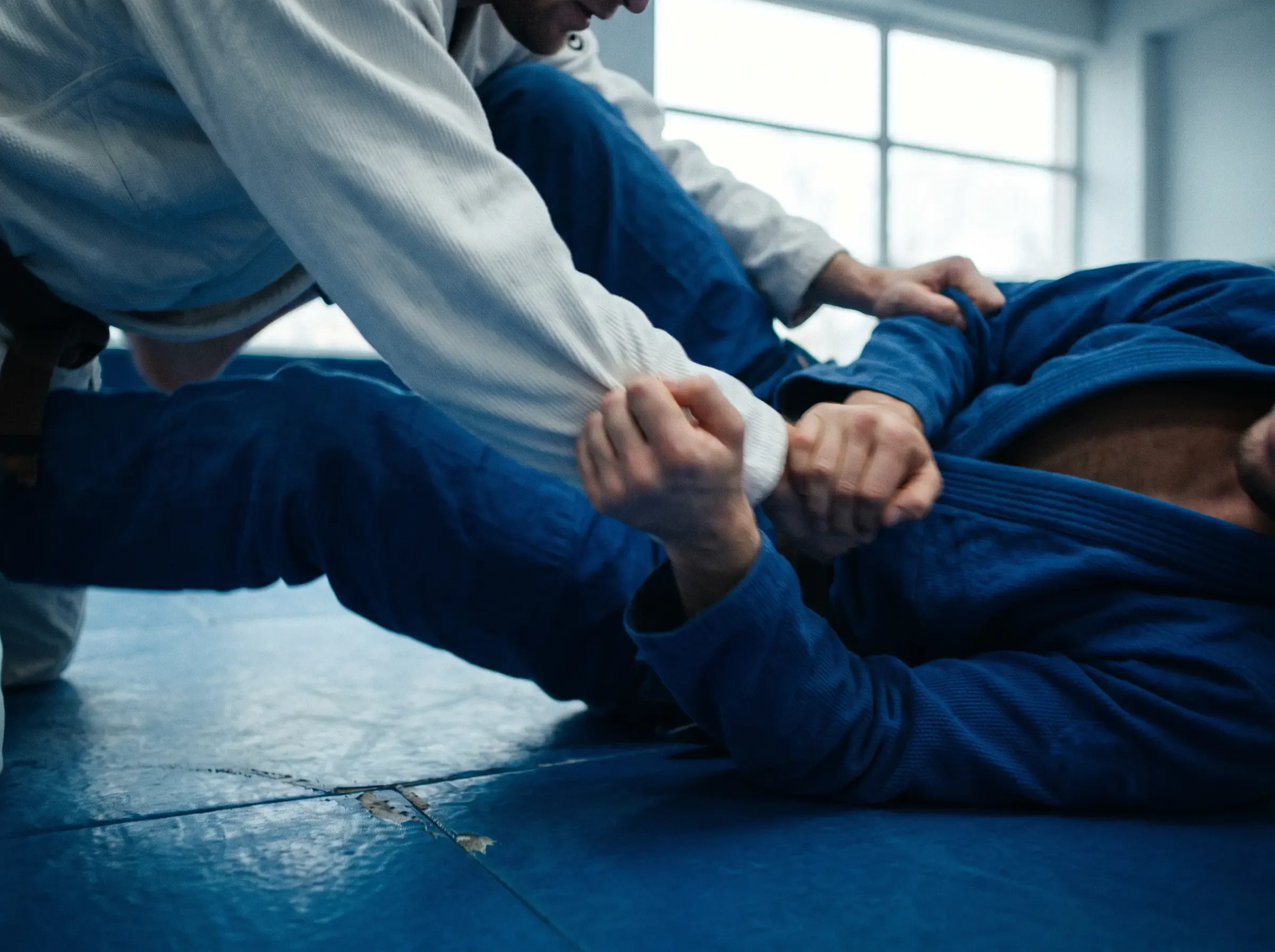
Being pain-free is not the same as being ready to roll. It's one of the most common gaps in combat sports rehab, and it's why athletes get re-injured within weeks of coming back to full training.
Pain is a late signal. Tissue can be under-recovered and under-strength while still feeling completely comfortable at rest and through the range a standard assessment covers.
Medical Disclaimer: The information in this blog is intended for general educational purposes only and does not constitute medical advice. It is not a substitute for professional assessment, diagnosis, or treatment by a qualified health practitioner. If you are experiencing pain, have sustained an injury, or are unsure whether it is safe to continue training, seek assessment from a qualified physiotherapist or medical professional.
What pain-free actually tells you
A pain-free assessment tells you how an area behaves at rest and under low load. It doesn't tell you how it behaves in a scramble, under a takedown, through a submission defence, or across the cumulative load of a 90-minute session with five live rounds.
Those are different questions and they need different tests.
What roll-ready actually requires
Strength. The injured side needs to test close to symmetrical against the uninjured side under load. A knee that feels fine but produces 70 percent of the other leg isn't ready for takedown defence, guard retention or explosive scrambles.
Range through sport positions. Near-full range across the positions your sport actually demands. Clinical range on a treatment table and range under a resisted kimura are two different measurements.
Power and reactive capacity. Rolling is explosive and reactive. Aerobic and strength capacity gets you part of the way there. Tissue also has to handle speed, impact and unplanned load before you re-expose it to all three at once.
Psychological readiness. Athletes who come back before they feel ready tend to move half-committed, and half-committed is how people get hurt in positions where full commitment is what protects you.
How a sport-specific clearance is tested
A return-to-training assessment tests you against criteria for your discipline rather than general function.
For BJJ, that means single leg hop testing, loaded tolerance in guard, half guard and scrambling positions, and movement quality once you're tired. For Muay Thai, kick mechanics under progressive load, checking capacity, and rotational tolerance through the trunk. For MMA, criteria across striking, wrestling and grappling, because one clean range says nothing about the other two.
Range-of-motion checks and a conversation are the starting point. The tests above are what turn that into a clearance you can act on.
What moves you from one phase to the next
Rehab here runs through four phases, Assess, Rebuild, Return and Perform. Movement between them is earned by what you can demonstrate, not by how many weeks have passed since the injury.
Two athletes with the same injury on the same day can progress at very different rates depending on training history, strength baseline, and how well the first fortnight was managed. That's why the plan gets written as criteria rather than dates.
If you've been cleared but you don't feel ready
Trust that. Ask for objective testing against the uninjured side, or get a second opinion from someone who works with your sport. Going back before the body is prepared usually costs more time than the original injury did.
We work with combat athletes in-clinic in Moonee Ponds and online anywhere in Australia, as part of the wider combat sports physio work across BJJ, MMA, Muay Thai and boxing.
Common questions
How do I know when I'm ready to start light sparring?
Common criteria are near-full range through sport-specific positions, strength within 80 to 85 percent of the uninjured side, and the ability to handle a hard session without symptoms flaring the following day. Testing against those is more reliable than going by feel.
My pain is 0 out of 10, can I just ease back into rolling?
Zero pain is necessary and not sufficient on its own. Strength, power and movement quality under fatigue all need confirming before you go back to live rounds, whatever the pain score says.
What's the risk of going back too early?
Higher re-injury rates, a longer total recovery, and often more tissue damage the second time than the first. The link between premature return to contact sport and re-injury is one of the better supported findings in sports rehabilitation.
Do I need a referral to see a physio for a combat sports injury?
No. Physiotherapists are first-contact practitioners in Australia, so you can book directly without a GP referral. You only need one if you are claiming through a Medicare care plan, DVA, or a workplace scheme.
Related reading
How long does it take to return to rolling after an ACL injury?
Training BJJ with a shoulder injury: what's safe and what's not
If you've been cleared to train and you're not confident it's safe yet, book an initial consult. It is a free 15-minute call, no cost and no obligation, to work out whether we are the right fit and what your next step should be.
Not in Melbourne? Online injury rehab runs Australia-wide.