Can I train BJJ with a knee injury?
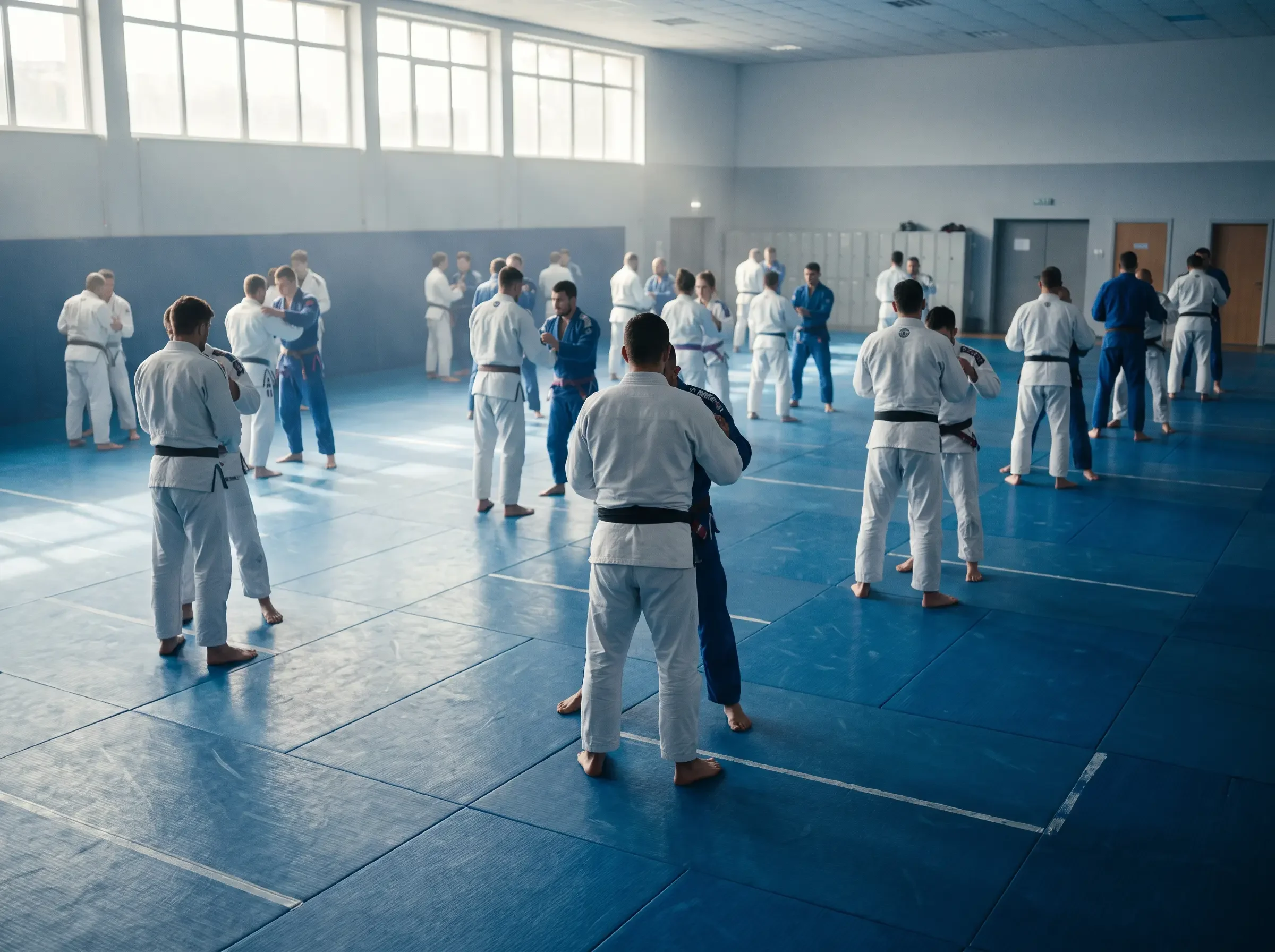
Short answer: in most cases, yes. Plenty of knee injuries let you keep training BJJ as long as you know what to modify and what to leave alone.
Complete rest is rarely the right call. Stopping everything leads to deconditioning, lost timing, and often a slower recovery than a well-managed modified training plan. This post is about what you can realistically do this week, not the full rehab pathway.
Medical Disclaimer: The information in this blog is intended for general educational purposes only and does not constitute medical advice. It is not a substitute for professional assessment, diagnosis, or treatment by a qualified health practitioner. If you are experiencing pain, have sustained an injury, or are unsure whether it is safe to continue training, seek assessment from a qualified physiotherapist or medical professional.
What you can usually keep training
Most knee injuries leave a surprising amount of your game intact. The list below is the starting point we work from with BJJ athletes, then adjust to the specific injury.
Upper body drilling. Grip fighting, collar and sleeve control, arm drags, wrist control, underhook battles from a seated or kneeling position. None of it loads the knee meaningfully and all of it is the part of your game most people neglect anyway.
Seated and supine guard technique. Closed guard control, collar sleeve, spider and lasso entries, armbar and triangle mechanics from the bottom. Drilled at low intensity with a cooperative partner, these keep your guard game sharp without the joint loads of live scrambles.
Positional work from the top, with restrictions. Side control, mount and back control maintenance. You hold the position, your partner works. No explosive passing, no driving through knee cut pressure, no scrambles.
Submission escapes and defence. Escaping mount and side control, hand fighting from bad positions, defensive frames. High value, low knee load.
Upper body strength and conditioning. Pulling, pressing, grip work, carries where the knee tolerates them. This is the window where most grapplers build the upper body base they never usually have time for.
Cardio you can tolerate. Depending on the injury, that might be a bike, a rower with a shortened stroke, or upper body ergometer work. Losing your gas tank is the thing that makes coming back feel hardest.
Injury type changes what is safe
Not all knee injuries behave the same way, and what you can train varies significantly.
Meniscus injuries. Often manageable with drilling modifications. Positions that load the knee in deep flexion, including bottom closed guard, may need to come out early, while positional work from top or standing continues.
MCL sprains. Grade 1 MCL sprains often allow continued training with bracing and load modification within days. Takedown drilling and guard passing usually need to be pulled back temporarily.
ACL injuries. More significant. The acute phase means protecting the joint from instability positions, but drilling, upper body BJJ work and conditioning can often continue even early on.
The 3 out of 10 rule
A useful guide from clinical practice: pain during exercise stays at 3 out of 10 or below, and the knee feels no worse the next morning than it did before you trained. If you are waking up with noticeably more swelling or pain after a session, you have gone past what the joint can handle at that stage.
What to stop doing
Three habits keep BJJ athletes injured longer than they need to be.
Judging readiness by how the knee feels at rest. A knee that is comfortable on the couch tells you very little about a knee under a leg entanglement. Readiness is about load tolerance, not comfort.
Training through significant pain and swelling. Waiting for it to settle on its own while you keep loading it is how a manageable injury turns into a recurring one.
Stopping everything and waiting for a "full recovery". Months of lost fitness, and a joint that has been protected rather than progressively loaded, is a harder starting point than the injury was.
When to get it assessed
If knee pain has lasted more than two weeks, is affecting your ability to train, or keeps returning after you think it has resolved, it is worth getting a sport-specific assessment. A BJJ physiotherapist will assess your injury against the actual demands of rolling, not just whether it hurts at rest.
For how the rehab itself progresses from acute injury back to full rolling, read our guide to BJJ knee injury rehab. If you would rather see how we handle knee injuries in person, that sits on the BJJ physio page, and the same approach across every sport is on the combat sports physio hub.
Common questions
Do I need a referral to see a physio for a BJJ injury?
No. Physiotherapists are first-contact practitioners in Australia, so you can book directly without a GP referral. You only need one if you are claiming through a Medicare care plan, DVA, or a workplace scheme.
Can I roll with a knee brace if I have a BJJ knee injury?
Bracing can provide support for some injury types, particularly MCL sprains, but it is not appropriate for every knee injury. Whether it helps depends on the injury type and the phase of rehab you are in, so it is worth confirming before you train in one regularly.
How do I know if my knee injury is serious enough to stop training completely?
Significant swelling within hours of the injury, instability during simple movements like walking, or pain above 5 out of 10 at rest are all signs worth getting assessed promptly. Many injuries do not require stopping training, but a few do, and the distinction matters.
Should I ice my knee after BJJ training?
Ice can help manage pain and swelling in the acute phase, roughly the first 48 to 72 hours. Beyond that its role is more about comfort than recovery. Active movement within a comfortable range tends to do more for ongoing recovery.
Related reading
How long does it take to return to rolling after an ACL injury?
Training with a combat sports injury: what is safe and what makes it worse
Training BJJ with a shoulder injury: what's safe and what's not
If you are dealing with a knee injury and you are not sure what is safe to train, book an initial consult. It is a free 15-minute call, no cost and no obligation, to work out whether we are the right fit and what your next step should be.