Training With a Combat Sports Injury: What's Safe and What Makes It Worse
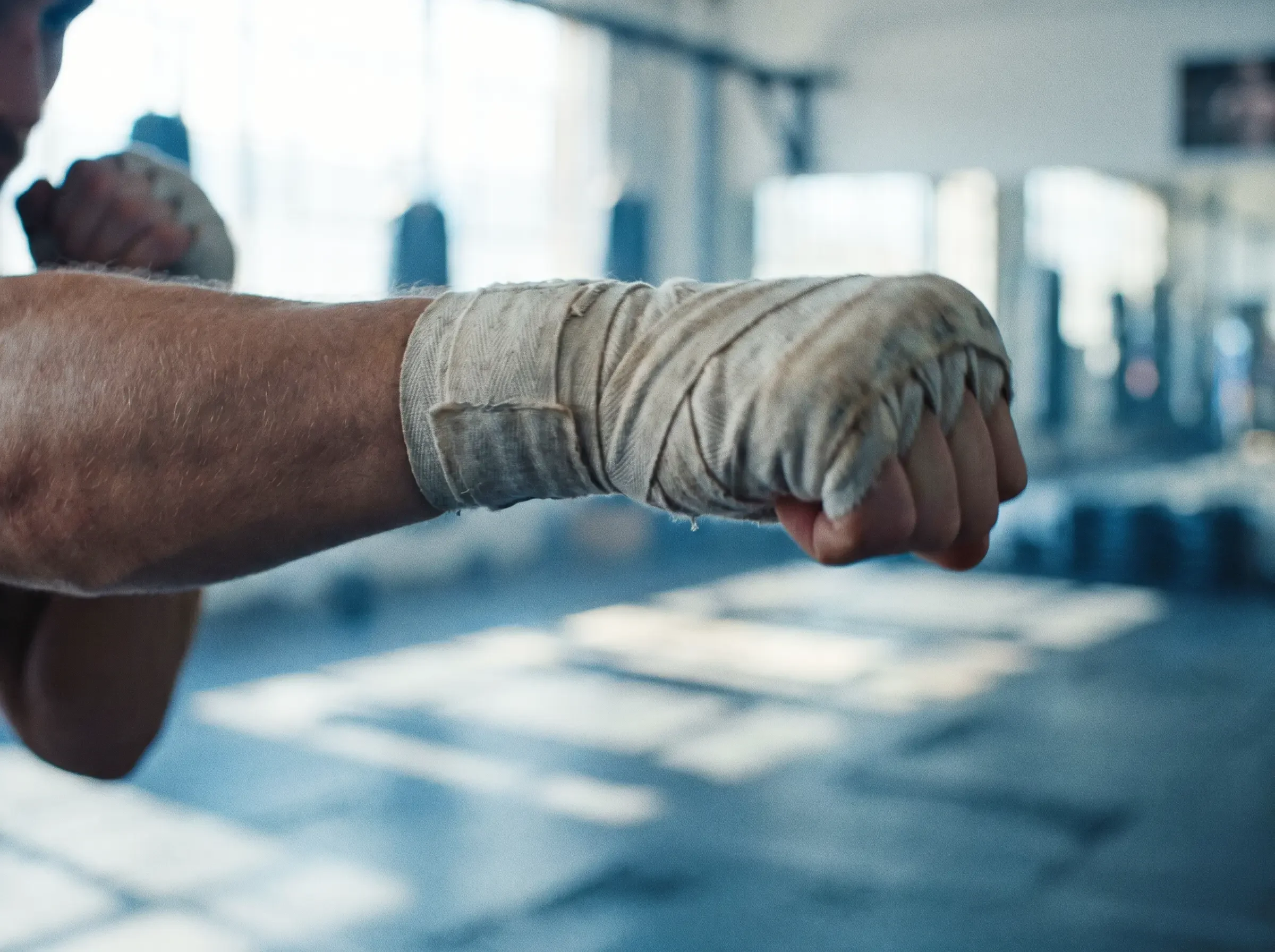
The worst advice most combat athletes get after an injury is "stop training". The second worst is "just push through it".
The useful answer sits between them, and it is far more specific than either. The job is to work out exactly what you can keep doing safely while the injured structure recovers, then do that with intent.
This guide is for BJJ, Muay Thai, boxing and MMA athletes who are injured and do not want to lose months of fitness, skill and camp preparation sitting on a couch.
Medical Disclaimer: The information in this blog is intended for general educational purposes only and does not constitute medical advice. It is not a substitute for professional assessment, diagnosis, or treatment by a qualified health practitioner. If you are experiencing pain, have sustained an injury, or are unsure whether it is safe to continue training, seek assessment from a qualified physiotherapist or medical professional.
Why complete rest is rarely the right answer
When you stop training entirely after an injury, several things happen at once. Your cardiovascular base drops, your movement patterns get rusty, your timing fades, and the injured tissue heals more slowly without appropriate mechanical stimulation.
Connective tissue, meaning ligaments, tendons and cartilage, needs progressive loading to heal properly. Prolonged immobilisation produces weaker, less organised scar tissue. The "stay off it completely" approach made sense before we understood tissue healing biology. Current evidence points the other way.
There is a psychological cost too. For most combat athletes, training is stress management, community and identity all at once. Eight weeks off the mats has a mental health cost that is real and worth taking seriously.
The principle: load what you can, protect what you cannot
Every injury has a specific structure affected, specific movements that load that structure, and specific movements that leave it alone. The work is identifying which is which, ideally with a physio who understands the demands of your sport.
This is highly individual. A BJJ athlete with a knee injury can often do extensive upper body drilling, guard work from a seated position, and upper body strength training. A boxer with a shoulder injury can often continue lower body conditioning, footwork, and some technical combinations with a modified guard. A Muay Thai athlete with an ankle sprain can often keep training punching technique, clinch work in a stable stance, and upper body conditioning.
What you cannot do depends entirely on the injury, its grade, and its stage of healing.
A quick guide by injury and sport
BJJ knee injury, MCL or meniscus. Usually still available: upper body drilling, seated guard technique, submission entries and escapes from positions that do not load the knee, upper body strength and conditioning. Usually off the table: takedowns, standing scrambles, deep loaded knee flexion, live rolling with leg entanglements.
BJJ shoulder injury. Usually still available: lower body drilling, guard passing that does not load the shoulder, leg lock entries and defences, lower body conditioning. Usually off the table: submissions requiring shoulder rotation such as kimuras and americanas, posting on the shoulder while rolling, heavy upper body loading.
Muay Thai ankle sprain. Usually still available: upper body pad work from a bilateral stable stance, shadowboxing with limited pivoting, standing clinch entries and work, upper body strength, core conditioning. Usually off the table: kicking on the affected side, pivoting, single leg balance work, checking. There is more detail on how this rehabs on the Muay Thai physio page.
Muay Thai rib injury. Usually still available: footwork, shadowboxing without body shots, technical drilling, lower body conditioning, light pad work with guard modifications. Usually off the table: absorbing body kicks or knees, clinch where you will take body pressure, anything requiring a full forced exhalation under impact.
Boxing shoulder or elbow. Usually still available: footwork, head movement drills, lower body conditioning, shadowboxing with a modified guard, bag work with the unaffected side. Usually off the table: full combination volume on the affected side, sparring where the arm gets loaded unpredictably, bag work that loads the injured structure.
Head injury sits outside all of this
Everything above applies to musculoskeletal injuries, where the working principle is to keep loading what you can safely load. A head knock runs on different rules, and applying the logic above to one is where this thinking gets genuinely dangerous.
With a suspected concussion, contact training stops until a doctor has assessed you. The return runs through a graded protocol with mandatory stand-down periods attached, and in Victoria those periods are set by the combat sports regulator rather than by how you feel.
Once a doctor has assessed and cleared you, the staged return to contact gets programmed like any other rehab. The assessment comes first, always. We have covered how that process works in MMA concussion: when can I return to sparring?
The signs you are doing too much
Training around an injury runs on honest self-monitoring. The general principle is that you should not be seeing increased pain, swelling or reduced function after a session. Minor discomfort during activity is often acceptable. Pain that builds across a session, or that is clearly worse the next morning, is a signal to pull the load back.
The specific threshold shifts with the injury and the phase you are in, which is where a proper assessment earns its keep.
The biggest mistake is guessing
The athletes who manage injuries best are the ones working from the clearest information. They know what they are dealing with, what they can train, what to avoid, and what the path back to full training looks like.
That clarity comes from a proper assessment. It does not come from a Google search at 11pm, or from what your training partner had done to their knee. If you want to see how we structure that across each sport, start at the combat sports physio hub.
Common questions
Do I need a referral to see a physio for a combat sports injury?
No. Physiotherapists are first-contact practitioners in Australia, so you can book directly without a GP referral. You only need one if you are claiming through a Medicare care plan, DVA, or a workplace scheme.
How much pain is acceptable while I train around an injury?
A common working guide is that pain during the session stays low and settles within 24 hours, and the area feels no worse the next morning than it did before you trained. Pain that climbs through a session, or swelling that appears afterwards, means the load was too high for that stage.
Should I strap or brace it and keep going?
Sometimes. Strapping and bracing can make certain injuries safe to train around, particularly some ligament sprains, and they are unhelpful or masking for others. It is worth confirming which applies to your injury before you rely on it session after session.
Will training around an injury make my recovery take longer?
Appropriately loaded training generally shortens the overall timeline rather than extending it, because you keep the strength and conditioning you would otherwise have to rebuild from scratch. The risk sits in training the injured structure itself too hard too early, which is why the list of what to avoid matters as much as the list of what to keep.
Related reading
If you are dealing with an injury and you are not sure what is safe to train, book an initial consult. It is a free 15-minute call, no cost and no obligation, to work out whether we are the right fit and what your next step should be.
Not in Melbourne? Online injury rehab runs Australia-wide.