Muay Thai Shin Pain: Bruising, Conditioning and When It's Something More
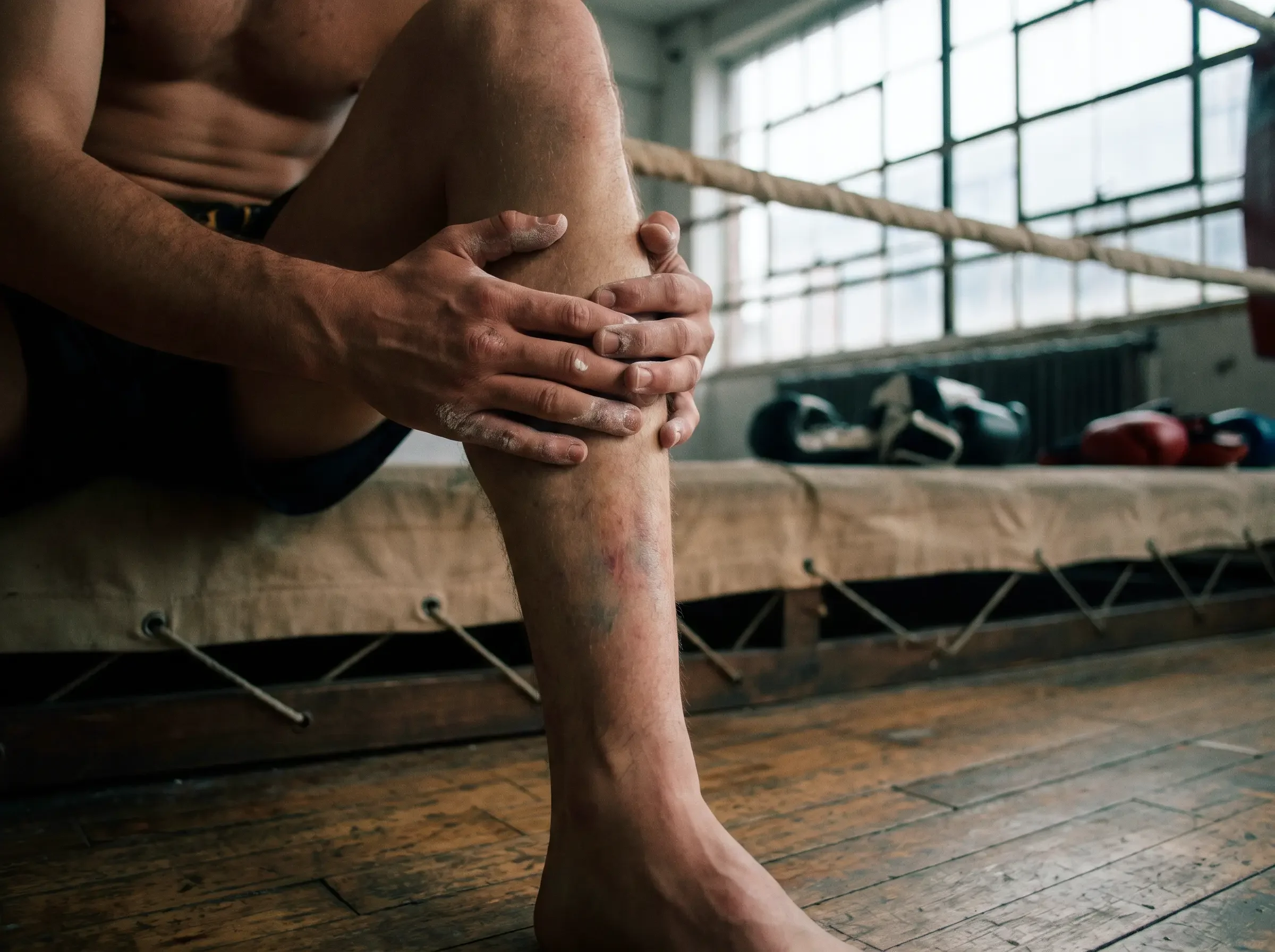
Sore shins are almost a rite of passage in Muay Thai. You check a few hard kicks, throw a session of teeps into the pads, and your shins let you know about it for the next two days. Most of the time that's normal. Sometimes it isn't, and telling the difference is what keeps a niggle from turning into a layoff.
This is a rundown of what's actually happening when your shins hurt, how conditioning works, which popular conditioning methods are worth skipping, and the signs that shin pain needs assessing rather than training through.
Medical Disclaimer: The information in this blog is intended for general educational purposes only and does not constitute medical advice. It is not a substitute for professional assessment, diagnosis, or treatment by a qualified health practitioner. If you are experiencing pain, have sustained an injury, or are unsure whether it is safe to continue training, seek assessment from a qualified physiotherapist or medical professional.
Why shins take such a beating in Muay Thai
No other sport loads the shin the way Muay Thai does. You throw kicks into pads, bags and shields. You check kicks bone on bone. You teep off the lead leg and absorb pressure through the clinch. Every one of those is repeated impact straight into the front of the tibia, session after session.
That load is why shin pain is so common in the sport, and it's why advice like "rest it for a few weeks" tends to miss. It doesn't account for what the shin has to go back to doing. We've covered why rest on its own rarely gets a fighter back to training in more detail.
What shin conditioning actually is
Shin conditioning is a real adaptation. Repeated, controlled impact tells the tibia to lay down more density and thicken its outer layer over months, and the tissue around it becomes more tolerant of contact.
The drop in sensitivity that comes with it is your nervous system habituating to a familiar input. Nothing is being destroyed along the way, and nothing needs to be.
The catch is dose. Bone adapts when loading is repeated, progressive, and spaced with enough recovery to rebuild in between. Pile impact on too fast with no recovery and you tip past adaptation into irritation, then into injury. Conditioning and overload sit on the same line, and the skill is staying on the right side of it.
The conditioning methods worth skipping
Some of the most repeated shin conditioning advice in this sport doesn't match how bone actually adapts, and some of it carries real risk.
Rolling bottles, rolling pins or sticks along the shin. The front of the tibia has almost nothing covering it: skin, then a thin sleeve of periosteum, then bone. Grinding a hard object along it risks irritating the exact tissue that becomes inflamed in periostitis, and it doesn't deliver the kind of loading bone adapts to. You get the pain without the adaptation.
Kicking trees, poles and other rigid objects. Bone responds to load it can recover from. An immovable object returns the full force with no control over the dose, and the failure mode is an acute fracture rather than a gradual adaptation.
Deliberately trying to numb the shin. Shin pain is dose information. It's how you find out your last block was too much, and an athlete who has trained themselves out of feeling it has given up the earliest warning that something is building.
The three things shin pain usually turns out to be
Shin pain in Muay Thai almost always falls into one of three buckets. They overlap in how they feel and separate sharply in how they're managed.
Bruising and soft tissue contusion. A direct blow, usually from checking or catching a shin on a knee or an elbow. Swelling and discolouration spread across an area, tender to touch, settling over days. Occasionally a haematoma sits on the bone surface and takes considerably longer to resolve than the bruise makes it look.
Periostitis. Irritation of the periosteum from repeated impact. It aches along a length of the shin rather than at one point, it's sore to press across a band, and it's often worst at the start of a session and easier once you're warm.
Bone stress reaction and stress fracture. Loading has outrun the bone's ability to recover from it. Pinpoint tenderness on the bone, pain that builds across a training block, pain that turns up at rest or at night. Trained through, a stress reaction can progress to a stress fracture, and that is a long time off your feet.
Periostitis and an early stress reaction feel similar from the inside and are managed very differently. Sorting them by feel is unreliable, which is the reason to get it looked at rather than guess.
The signs worth getting assessed
Get it looked at if any of these apply:
Pain that localises to one specific spot on the bone rather than a general ache
Pain that gets worse the more you load it, instead of easing as you warm up
Pain that lingers for days or keeps building across a training block
Tenderness on the bone that's there even when you press on it off the mats
Pain that turns up at rest or at night
One situation doesn't go to a physio at all. Severe and escalating pain after a hard blow to the shin, tightness in the lower leg out of proportion to the impact, numbness or pins and needles in the foot, or pain that keeps climbing instead of settling: that combination can indicate acute compartment syndrome, which is a surgical emergency. Go to an emergency department.
What you can still train with a sore shin
Once you know what you're dealing with, a cranky shin rarely means stopping everything. There's usually plenty left: hands and boxing work, upper body and clinch drilling with kicks dialled back, conditioning that doesn't hammer the shin, and technical work on the other leg and your defence.
Ankles take a similar beating from checking and pivoting, and the same principle applies there. Muay Thai ankle injuries covers that one.
The aim is managing the load on the shin while the rest of your game keeps moving, so you're not going dark for weeks and coming back to a shin that still isn't ready on top of a fitness base that's gone backwards.
How we approach shin injuries
At Combat Sports Consulting, shin injuries run through the Combat Ready System, a four-phase, criteria-based plan built around the demands of Muay Thai.
The Combat Ready System
Assess
We work out whether we're dealing with bruising, a load issue, or something in the bone, and measure it against how you actually train: how often you check kicks, how much sparring, whether you're in camp.
Rebuild
We settle the irritated tissue and keep you training what's safe, loading the shin in a controlled way so it starts adapting instead of resting and losing the conditioning you already have.
Return
Staged steps back to impact: pad work, then bag, then checking and sparring, each one unlocked by what the shin can handle rather than a guess at a timeline.
Perform
Progressive shin loading so the bone can take the volume of a full camp, plus the mechanics of how you check and kick, so the same problem doesn't keep coming back.
Common questions
Is shin pain normal in Muay Thai?
Soreness after hard kicking or checking is normal and usually settles in a day or two. The patterns worth getting checked are pain that localises to one spot on the bone, pain that gets worse with load, pain that lingers for days, and pain that turns up at rest.
Does rolling a bottle on your shins condition them?
It builds pain tolerance, and that's about all it does. The front of the shin has very little covering it, so grinding a hard object along it risks irritating the periosteum without producing the kind of loading that makes bone adapt. Controlled impact through pads and bags, ramped up gradually with real recovery in between, is what does the work.
When is shin pain a stress fracture?
Pinpoint pain on the bone that builds across a training block, worsens with loading, and can show up at rest or at night is the pattern that points toward a tibial stress reaction or stress fracture. It needs assessing, sometimes with imaging, rather than training through.
Can I keep training with a sore shin?
Usually yes, with the load managed and once you know what's causing it. In most cases you can keep working your hands, clinch, conditioning and technical drilling while the shin settles.
Do I need a referral to see a physio for a Muay Thai injury?
No. Physiotherapists are first-contact practitioners in Australia, so you can book directly without a GP referral. You only need one if you are claiming through a Medicare care plan, DVA, or a workplace scheme.
Related reading
Combat Sports Consulting is a combat sports physiotherapy practice in Moonee Ponds, Melbourne, working with BJJ, MMA, boxing and Muay Thai athletes, and online anywhere in Australia. More on how we work sits on the combat sports physio hub, and the sport-specific detail is on the Muay Thai physiotherapy page.
If your shins aren't settling between sessions and you're not sure whether to push or pull back, book an initial consult. It's a free 15-minute call, no cost and no obligation, to work out whether we're the right fit and what your next step should be.