Returning to sparring after a boxing shoulder injury
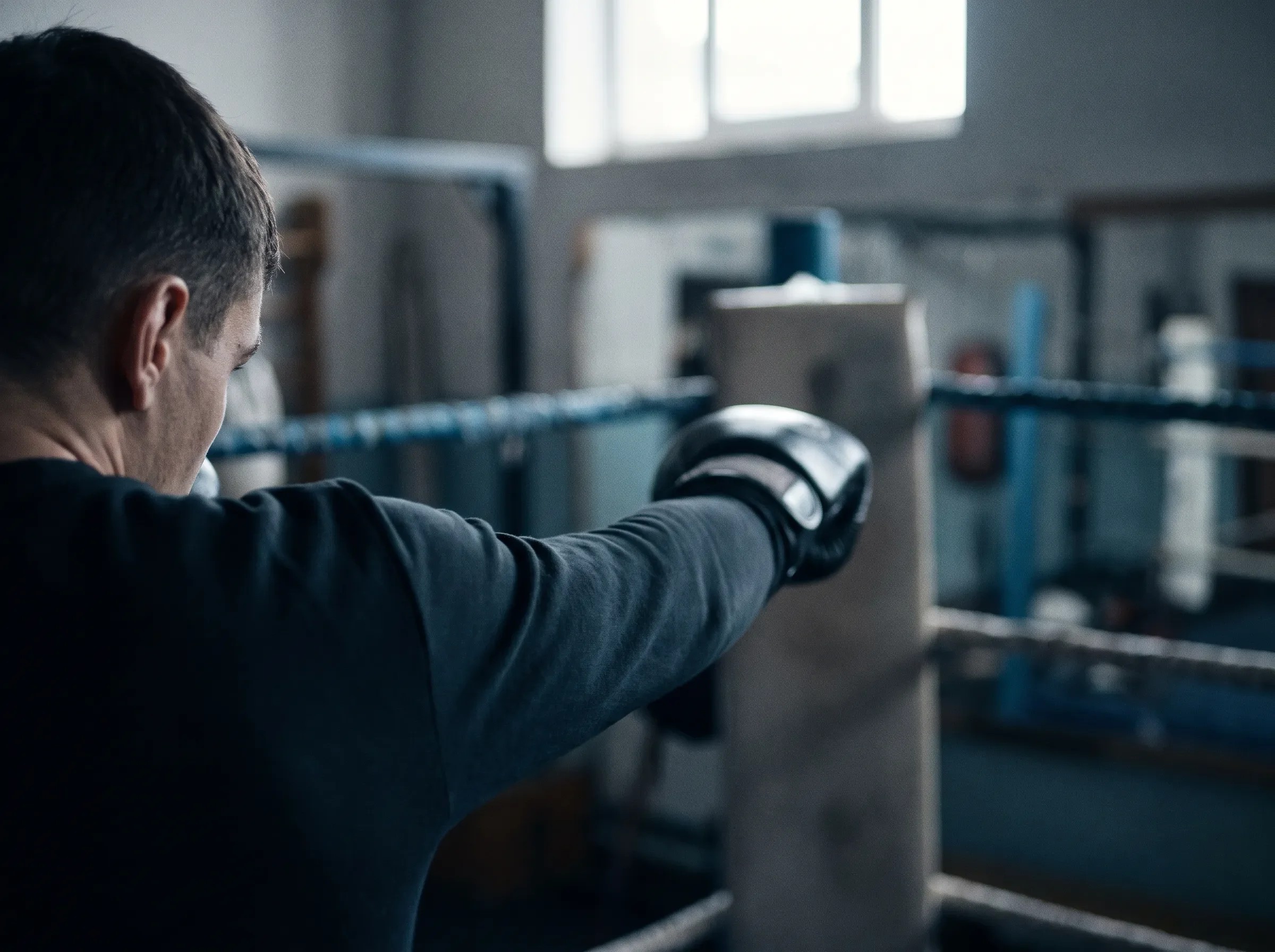
The shoulder does more work in boxing than almost any other joint. It throws every punch, holds the guard up for the length of a round, absorbs shots that land on the arms, and does all of it while fatigued. So when it goes, the gap between feeling fine on the bag and being ready to spar is wider than most fighters expect.
This is about that gap. What the common boxing shoulder injuries actually are, what you can keep training while one settles, and the criteria worth clearing before you put the gloves back on with a live partner in front of you.
Medical Disclaimer: The information in this blog is intended for general educational purposes only and does not constitute medical advice. It is not a substitute for professional assessment, diagnosis, or treatment by a qualified health practitioner. If you are experiencing pain, have sustained an injury, or are unsure whether it is safe to continue training, seek assessment from a qualified physiotherapist or medical professional.
The shoulder injuries boxers actually present with
Rotator cuff strains and tendinopathy. The most common shoulder presentation in boxing. The cuff controls how the head of the humerus sits in the socket while the arm rotates, and it does that under load on every punch thrown. Tendinopathy builds gradually out of training volume, often over a camp. Acute strains tend to arrive in one moment, usually catching a heavy shot on the arm or overreaching on a punch that misses.
Subacromial pain and impingement. Usually a description of what hurts rather than a diagnosis on its own. Structures under the acromion are being compressed through a particular range, and the range is often the exact one a hook or an overhand right lives in. Cuff and scapular strengthening changes it more reliably than rest does.
AC joint sprains. Direct impact to the top of the shoulder, or landing on an outstretched arm. Recognisable because holding a high tight guard on that side becomes the problem rather than punching with it.
Anterior instability. Less frequent in boxing than in grappling, but it turns up in fighters with a history of dislocation, and in anyone whose arm gets taken into end range under load. Clinch work and shots that push the arm back are where it shows up.
Why bag readiness and sparring readiness are different things
A heavy bag is a known quantity. It sits where you left it, it doesn't hit back, and you choose every punch you throw at it. Your shoulder gets loaded in patterns you selected, at an intensity you set, with a rest whenever you want one.
Sparring removes all of that. You catch shots on the guard that you didn't see coming, at angles you didn't choose. You get tied up in the clinch with someone leaning weight through your arms. You throw punches that miss and the arm carries through into range it wasn't meant to reach. And it all happens in round four when the shoulder is already tired and the scapular muscles that were holding position in round one have stopped doing it properly.
Fatigue is the part that gets underestimated. A shoulder can look completely controlled for two rounds and lose its position in the fourth, and the fourth round is where the reactive load is highest. Testing a shoulder fresh tells you very little about how it behaves when the round is nearly over.
What keeps running while the shoulder settles
A shoulder injury takes far less off you than it feels like it does in the first week. Almost the entire lower half of boxing is untouched.
Footwork, ring craft, head movement, slipping and rolling all continue. So does conditioning, and so does lower body and trunk strength work. Single-side pad and bag rounds with the uninjured arm are usually available early, and they keep the timing and the eyes sharp. Shadow work on the injured side often comes back sooner than fighters expect, in a controlled range and without force behind it.
The training that stops is the training that loads the injured tissue beyond what it can currently handle. That's a much shorter list than "boxing".
How the return gets built
The shoulder is a good example of why a rehab plan needs stages rather than a date. Here is how the four phases run for a boxing shoulder.
The Combat Ready System
Assess
We work out what the injury is and what caused it, whether that was a shot caught on the guard, a punch that overreached, or volume that built up across a camp. You leave knowing what is affected, what is not, and what the first stage looks like.
Rebuild
Cuff and scapular loading starts, and you get a written list of what still runs. Footwork, head movement, conditioning and single-side work keep going while the shoulder is rebuilt, so the rest of your boxing does not go backwards.
Return
Punching comes back in stages. Technique work at low force, then combinations, then full output on pads and bag, then contact through the arm. Each step opens on measured criteria rather than on how the shoulder felt that morning.
Perform
Strength and conditioning built around the shoulder's actual job in boxing: holding a guard late in a round, absorbing contact, and producing force when fatigued. This is the part that keeps the injury from becoming a recurring one.
The criteria worth clearing before you spar
Comfortable bag rounds are a milestone, not a clearance. Before sparring goes back in, the shoulder is worth testing against the things sparring will actually do to it.
It holds a guard under fatigue. Not for 30 seconds. For the back end of a round, after the arms are already heavy.
It takes contact rather than only producing it. Blocking and absorbing load through the arm is a different demand to punching, and it is the one bag work never trains.
It tolerates the clinch. Someone leaning weight through the shoulder, arms being pushed and pulled, no say in the direction.
Strength is comparable side to side. Measured, through the ranges boxing uses, rather than estimated from how the shoulder feels on the day.
It behaves the morning after. A session that felt fine and leaves the shoulder stiff and sore the next day is telling you the load was above what the tissue could handle, regardless of how it went at the time.
Sparring goes back in gradually once those hold. Controlled rounds with a trusted partner and an agreed intensity first, full rounds later. Going straight from bag work to open sparring skips the only stage where a problem can surface at a manageable cost.
Common questions
How long does a boxing shoulder injury take to recover?
It depends entirely on what the injury is. Cuff strains and subacromial pain often settle over several weeks with loading, while an AC joint sprain can range from a few days of modified training at the mild end to a couple of months at the more significant end. Structural injuries take longer again. Any timeline given before an assessment is a guess, and the useful version of the question is not how long, but what has to be true before each stage opens.
Can I still spar if I only use my good side?
Not really, and this is the one fighters most often talk themselves into. Sparring one-handed still means the injured shoulder holds the guard, still means it catches whatever lands on that arm, and still means the clinch happens. The injured side is under load whether or not you are punching with it. Controlled technical work with an agreed no-contact rule on that side is a different proposition, and worth setting up deliberately rather than assuming.
Do I need a scan?
Often not. Most boxing shoulder presentations are diagnosed clinically and managed the same way regardless of what a scan shows. Imaging becomes useful where there is significant weakness, a history of dislocation, a mechanism that suggests structural damage, or a shoulder that has not responded to appropriate loading. Scans of shoulders in people with no pain at all routinely show changes, which is why the picture only means something read alongside the examination.
Is surgery ever needed for a boxing shoulder?
Usually not. Cuff tendinopathy, subacromial pain and most AC joint sprains are managed without an operation. Significant cuff tears, higher grade AC joint separations and recurrent instability are the presentations where an opinion from an orthopaedic surgeon is worth getting, and that referral is part of a normal physio assessment rather than a separate errand.
Do I need a referral to see a physio for a boxing shoulder injury?
No. Physiotherapists are first-contact practitioners in Australia, so you can book directly without a GP referral. You only need one if you are claiming through a Medicare care plan, DVA, or a workplace scheme.
Related reading
Common boxing hand and wrist injuries: how long do they take to heal?
Training BJJ with a shoulder injury: what's safe and what's not
Boxing physio in Moonee Ponds
Combat Sports Consulting works with boxers, grapplers and strikers out of Moonee Ponds in Melbourne, and online anywhere in Australia. There is more on how shoulder rehab is built around punching and sparring on the boxing physiotherapy page, and a wider view of how the same approach applies across the combat sports on the combat sports physio hub.
If you are dealing with a shoulder injury and you are not sure what is safe to train, book an initial consult. It is a free 15-minute call, no cost and no obligation, to work out whether we are the right fit and what your next step should be.