Common boxing hand and wrist injuries: how long do they take to heal?
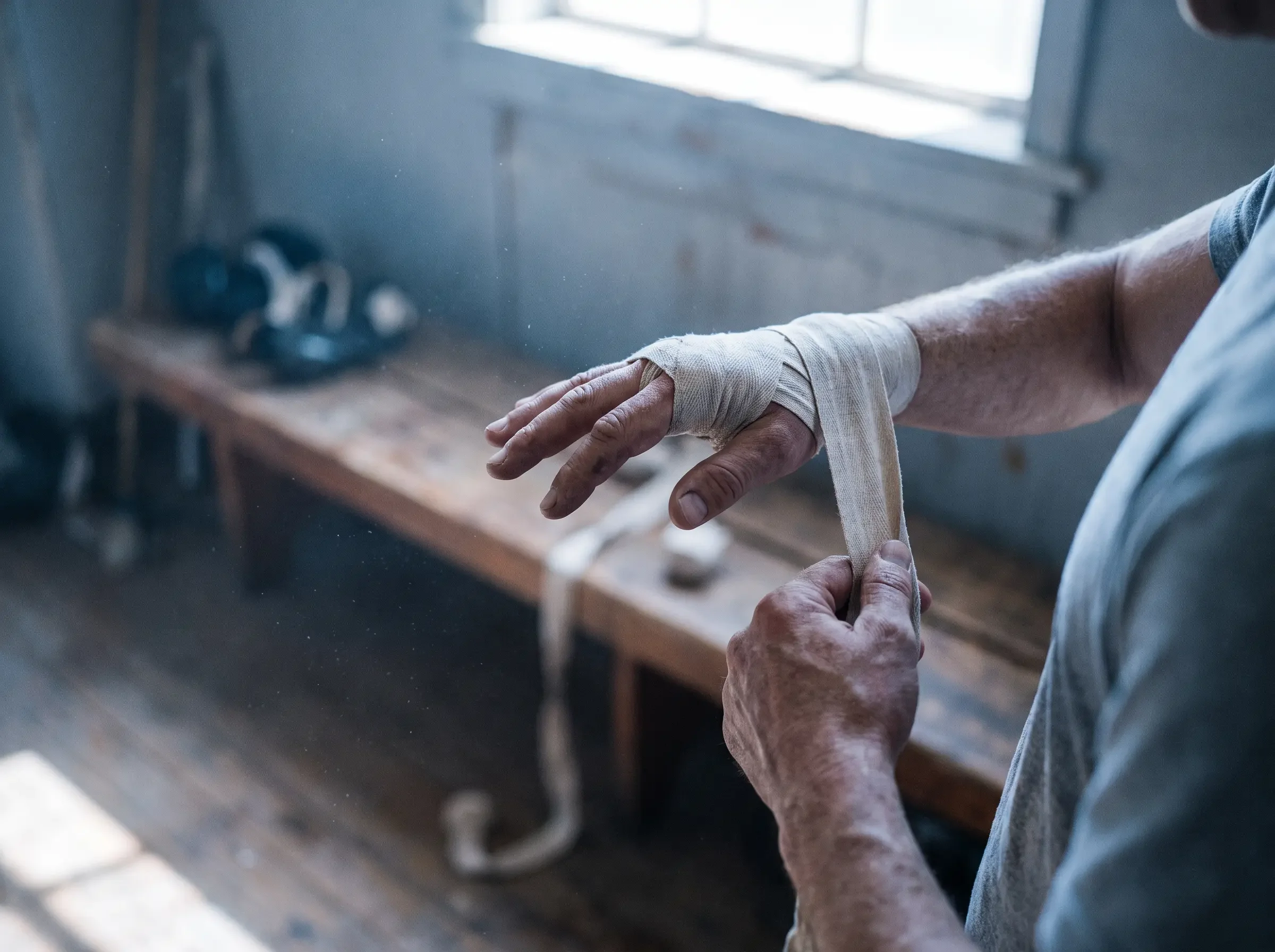
Hands and wrists are the most common thing boxers come in with, and the first question is almost always the same one. How long?
The honest answer is that it depends entirely on which structure you've hurt, and the range runs from a fortnight to the better part of a year. A bruised knuckle and a torn thumb ligament feel similar in the first week and have almost nothing in common after that. Getting the diagnosis right early is what stops a short problem turning into a long one.
Medical Disclaimer: The information in this blog is intended for general educational purposes only and does not constitute medical advice. It is not a substitute for professional assessment, diagnosis, or treatment by a qualified health practitioner. If you are experiencing pain, have sustained an injury, or are unsure whether it is safe to continue training, seek assessment from a qualified physiotherapist or medical professional.
The most common boxing hand and wrist injuries and how long they take
Boxer's knuckle. Damage to the extensor hood and sagittal band sitting over the knuckle, from repeated impact driving the tendon sideways off the joint. Minor cases settle in 2-4 weeks with load modification and taping. A larger tear needs 6-8 weeks of protection, and a complete rupture of the sagittal band often gets referred for surgical assessment because the tendon keeps slipping without a repair.
Metacarpal fracture. The 5th metacarpal is the classic, hence the name boxer's fracture. Undisplaced fractures usually need 4-6 weeks of protection and heal well. What decides whether it needs surgery is rotation more than angulation. The neck of the 5th metacarpal tolerates a surprising amount of angulation without affecting your hand, but a rotated fragment means the finger crosses over its neighbour when you close a fist, and that gets fixed rather than left.
Wrist sprains and TFCC injuries. The triangular fibrocartilage complex sits on the little-finger side of the wrist and takes a beating in boxing from repeated compression through a wrist that isn't quite aligned at impact. Minor sprains settle in 2-6 weeks. Genuine TFCC tears run months, because the central portion of the disc has almost no blood supply and does not reliably heal on its own.
Thumb UCL injury. The ulnar collateral ligament at the base of the thumb gets loaded by gripping and by the thumb getting caught on impact. Grade 1 and 2 sprains generally take 3-6 weeks with appropriate protection. A complete tear is a different conversation, because the torn end can flip out of position behind a layer of tissue and then physically cannot reach the bone it needs to heal to. That one goes to a hand surgeon.
Why the timelines vary this much
Four injuries, four completely different healing curves, and the reason is tissue type.
Bone with a good blood supply and no rotation heals predictably and on schedule. Muscle and well-vascularised soft tissue heals fast. Ligament heals slower and gets weaker for a period before it gets stronger. Cartilage in a low blood supply zone, like the middle of the TFCC, may not meaningfully heal at all without help.
Which is why a timeline you got from a training partner is close to useless. They had a different structure injured.
What you can still train
Hand and wrist injuries leave more of boxing open than most fighters assume in week one.
Footwork, head movement, defensive work and lower body strength are all untouched. Most conditioning stays available. Shadowboxing continues with the injured hand held out or moving without a fist. Depending on the injury, single-hand bag and pad work on the uninjured side often keeps going, which matters because losing your timing costs you more than losing a fortnight of volume.
The thing to be honest about is that gripping and punching cover a lot of ground, so a hand injury takes more off the table than a knee or a shoulder would. The work is finding what's left rather than assuming there's nothing.
How the return gets staged
The structure below is what turns a healing timeline into a training plan, so you're not guessing at what to test and when.
The Combat Ready System
Assess
Work out which structure is actually injured, with imaging where it is indicated, because the timeline for a bruised knuckle and a torn ligament are nothing alike. You leave with a plan mapped against your training week.
Rebuild
Protected loading starts early. Isometric grip and wrist work while the tissue settles, then progressive resistance. Bag work usually returns in this phase at controlled intensity with appropriate wrapping and support.
Return
Pad work and full combinations come back, with speed and impact building against defined criteria rather than a date. The hand is tested under load before sparring is on the table.
Perform
Full training, with wrapping technique reviewed, wrist and grip conditioning built in, and load managed so the same structure is not back in the same place in six months.
The point of running it this way is that the hand gets tested under progressively harder conditions before anyone throws a shot at you. Sparring is the last thing to come back because it's the one place you can't choose what your hand does.
Wrist position is the thing you actually control
Most boxing hand and wrist injuries come down to force going through the hand in a position that wasn't built to take it. A wrist that collapses even slightly at the moment of impact sends load through the small bones and the TFCC instead of straight up the forearm.
That makes wrapping technique and wrist alignment the mechanism you have the most control over. If you're picking up recurring hand issues, having someone watch your wrapping and your impact position is worth more than another few weeks of rest.
When to get it assessed
Get it looked at if it isn't clearly improving inside two weeks, if there's significant swelling or bruising, if you can't make a full fist, or if a finger crosses over another one when you close your hand.
Two specific ones are worth naming because they get missed and both punish being missed.
Pain in the anatomical snuffbox, the hollow at the base of the thumb, can be a scaphoid fracture. Scaphoid fractures often don't show on an initial X-ray and the bone has a blood supply that runs the wrong way, so a missed one can fail to heal at all. If that's where it hurts, get imaging and get it repeated if the first one is clear.
Pain deep in the base of the palm on the little-finger side can be a hook of hamate fracture. Also easy to miss on a standard X-ray, also prone to non-union, and it usually needs a specific view or a CT to find.
Common questions
Should I keep hitting the bag with a sore hand?
It depends what you've done. Some hand conditions tolerate bag work fine with wrapping and reduced intensity. Acute ligament sprains, suspected fractures and sagittal band tears need a period of protection before impact resumes. Loading it before you know what it is, is the fastest way to extend your time out.
Can I spar with a hand injury?
Sparring loads the hand in ways you don't control, including catching shots, clinching, and impact at angles you didn't choose. It's typically the last thing to return. Bag work, pads at controlled intensity and technical drilling should all be comfortable first.
My hand feels fine now, does that mean it's healed?
Not on its own, particularly with ligament and bone injuries. Pain settles before tissue strength returns, and the gap between the two is where re-injury happens. Testing it under load tells you more than how it feels sitting still.
How much does wrapping technique really matter?
A great deal, and it's the cheapest change available to you. Wrapping supports the wrist in a position that reduces loading through the TFCC and gives the knuckle structures some protection. Recurring hand problems in a boxer are worth investigating at the wrapping and impact position before anything else.
Do I need a referral to see a physio for a boxing injury?
No. Physiotherapists are first-contact practitioners in Australia, so you can book directly without a GP referral. You only need one if you are claiming through a Medicare care plan, DVA, or a workplace scheme.
Related reading
Combat Sports Consulting is a combat sports physio practice in Moonee Ponds, Melbourne, working with fighters in the clinic and online anywhere in Australia. There's more on how we work with boxers on the boxing physio page.
If you are dealing with a hand or wrist injury and you are not sure what is safe to train, book an initial consult. It is a free 15-minute call, no cost and no obligation, to work out whether we are the right fit and what your next step should be.