
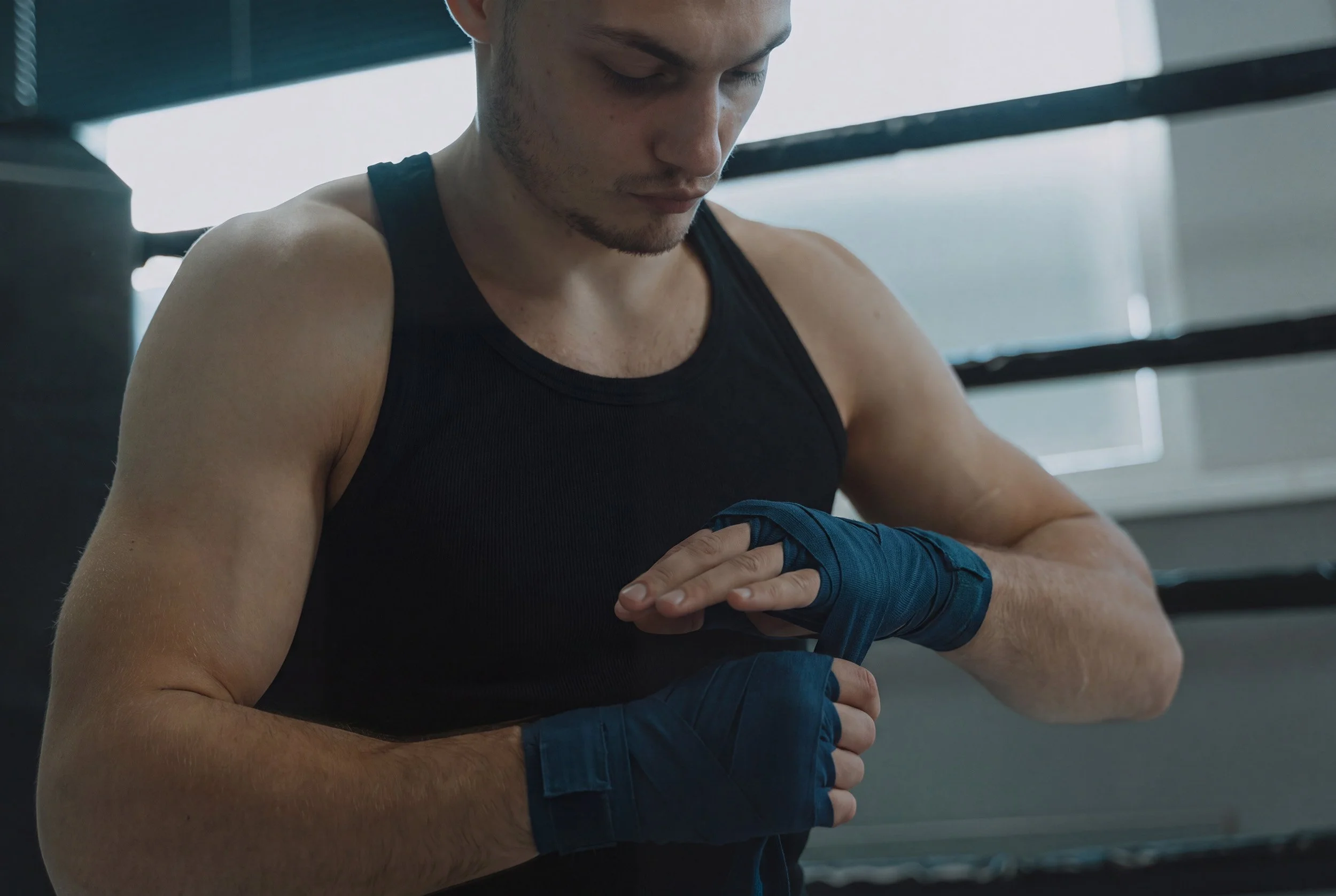
Online injury rehab for combat sports athletes
Rehab built around your sport, run remotely, anywhere in Australia.
Weekly coaching with a physiotherapist who trains in the same sports you do.
Meet Tom
Just over a minute on how online rehab works and who it's built for.
Who Tom works with
Tom is an AHPRA-registered physiotherapist and a member of the Australian Physiotherapy Association.
He trains and competes in Muay Thai and boxing, and he works with combat sports athletes across MMA, Muay Thai, boxing, BJJ and judo.
Tom has worked with the Australian Federation of Brazilian Jiu Jitsu and Muay Thai Victoria.

Who this is for
Online rehab suits some people and not others. Here's who it's built for.
You train a combat sport
MMA, Muay Thai, boxing, BJJ, judo, wrestling. Any discipline, any level, from your first session to a full camp.
You can't get to Moonee Ponds
You're regional, you're interstate, or the drive just doesn't work. The in-clinic option is off the table, so the rehab comes to you instead.
You want a program you'll actually follow
Weekly sessions, weekly check-ins, and testing at set points. It asks something of you, and it works best when you turn up for it.
You have a gym, or you're willing to kit out
Access to a gym covers most of it. If you're training at home, expect to buy a few basics. We'll go through exactly what you need on the call.
Not sure whether it fits? That's what the first call is for.
How it works
Five steps from the first call to your first week of programmed rehab.
A free 30-minute call
We talk through your injury, your sport and what you're training toward, and work out whether this fits. No cost, no obligation.
Your assessment, week one
A full session over video. Guided movement testing on camera, plus a map of what your training week actually looks like.
Your program gets built
Written for your injury and your sport, then loaded into the platform with sets, loads and coaching notes on every exercise.
Weekly coaching and check-ins
A one-hour one-to-one each week, plus a written check-in. The program gets adjusted from there.
Retesting at set points
Scheduled testing through the plan. Decisions about drilling, sparring and going hard get made against those results.
What you need at your end
Four things. Most people already have three of them.
A phone or laptop with a camera
Enough to run a video call and film yourself moving.
Room to move
Space to set the camera back a few metres so I can see the whole movement, not just part of it.
Gym access, or some basics at home
A gym covers everything. Training at home means buying a few pieces, usually bands and something to load with. We go through exactly what on the call.
Willingness to film yourself
Assessment and technique review both run on video. It gets normal fast.

Inside the rehab platform
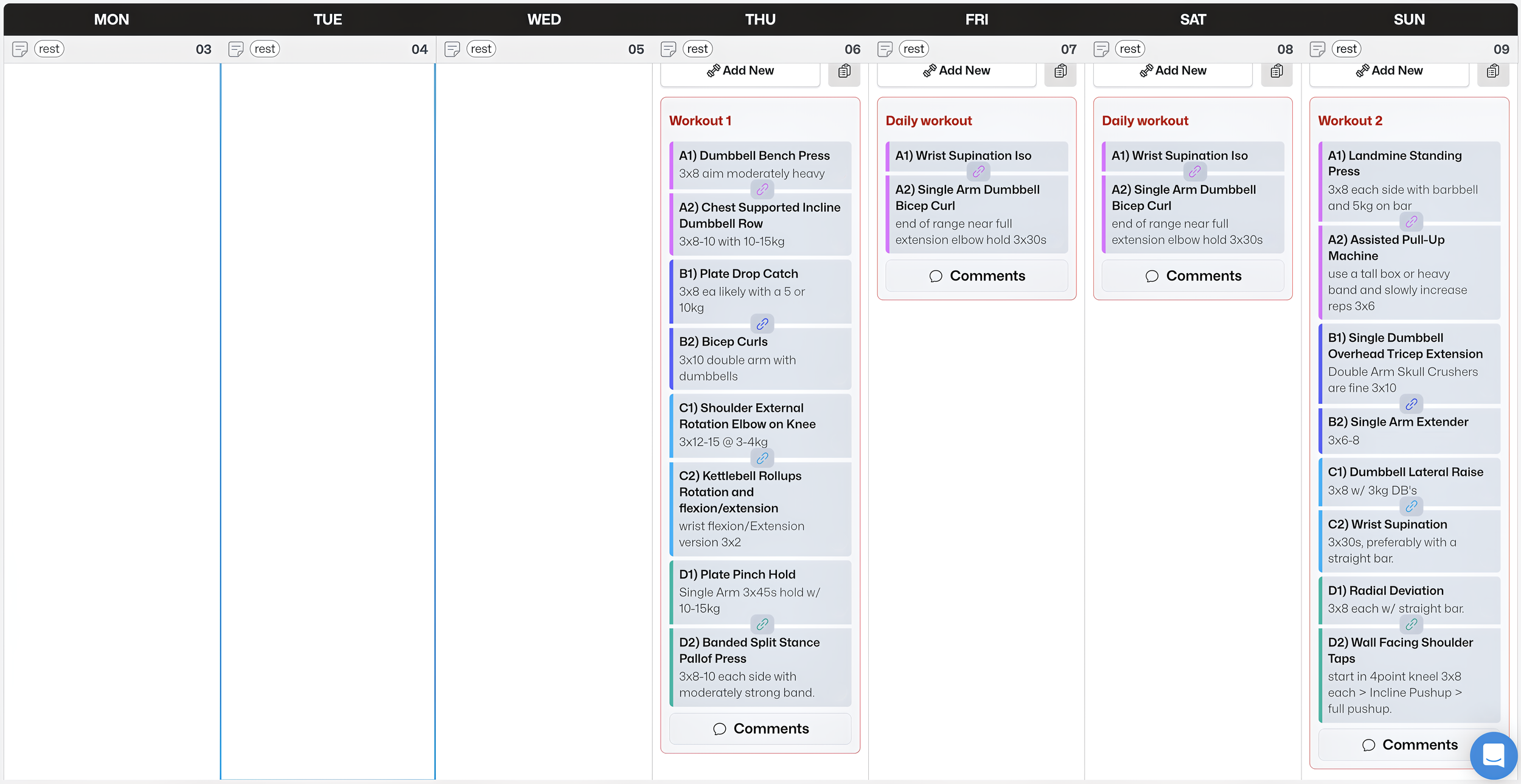
Your program lives on the rehab platform, which you open on your phone or your computer. Every session is written out before you get to the gym, exercise by exercise, so you're not turning up and deciding what to train. Here's what a week in it looks like.
The week
Training days and rest days both sit on the calendar. You can see the whole week before it starts.
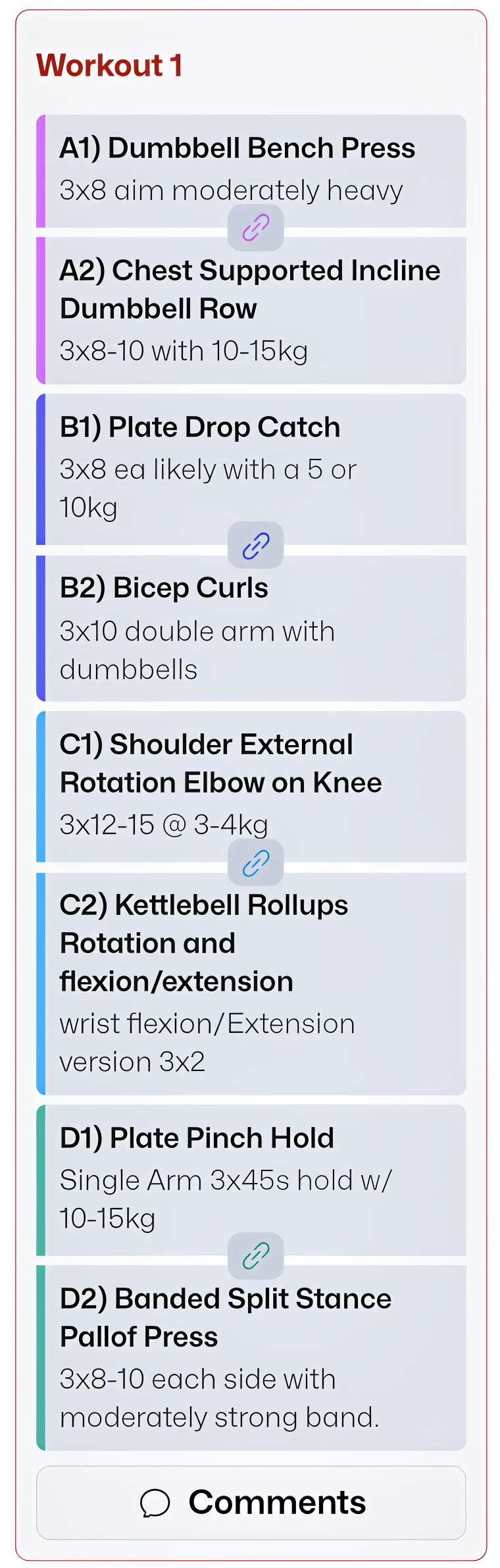
One session, in full
Open a day and the session lays out in order, grouped the way you're meant to work through it.
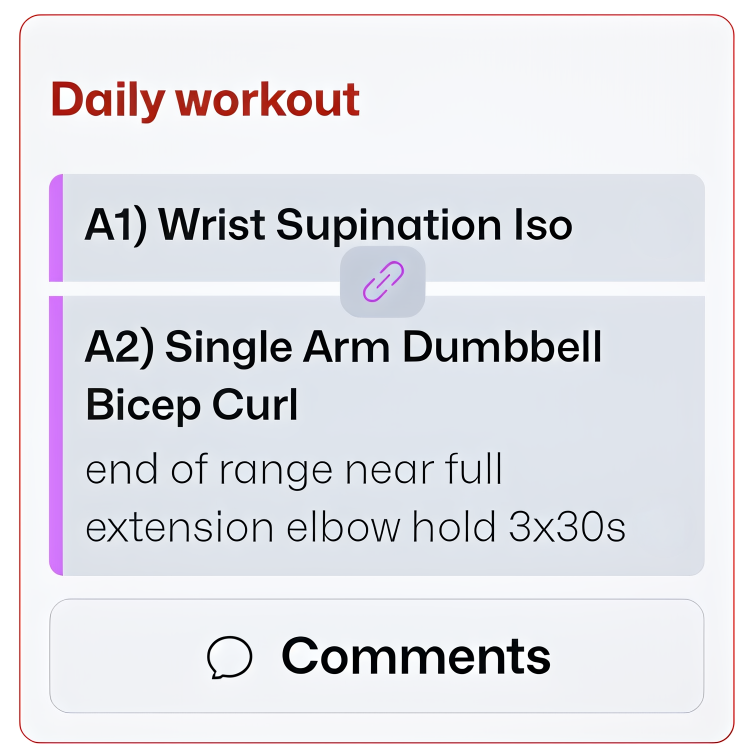
The daily work
Shorter daily pieces sit alongside the main sessions. This is the part that makes it a rehab program rather than a training program.
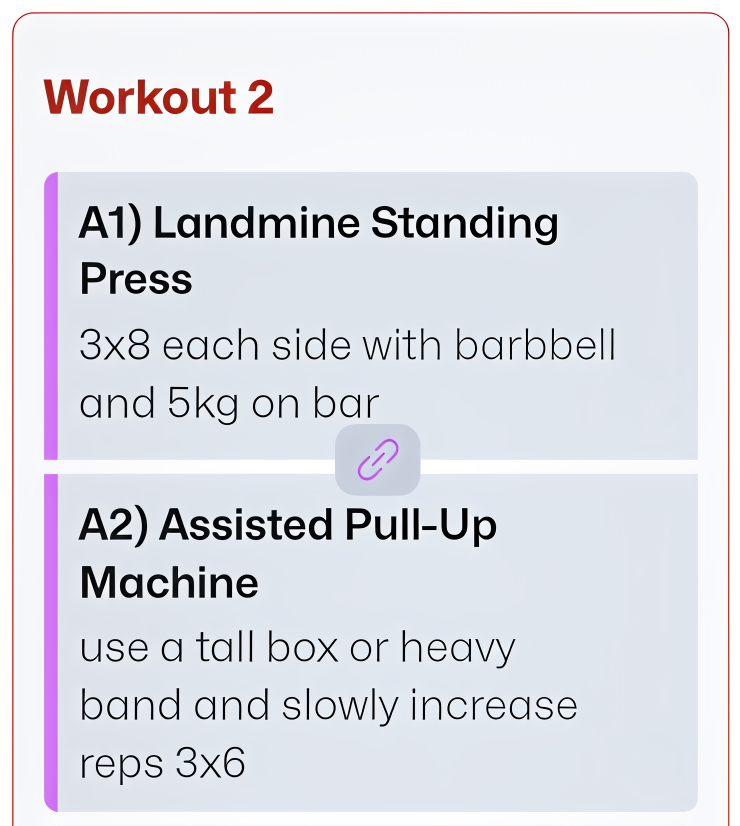
Notes from Tom
Where something needs adjusting for the gear you've got, the note sits on the session itself instead of in a message you'll scroll past.
What remote rehab can and can't do
Most of rehab is programming, loading and knowing when to progress, and all of that runs well over video. A few things need someone in the room. Here's exactly where the line sits.
What we do remotely
- Build and progress a rehab program around your specific injury and your sport
- Watch you move, on camera and in video you send through, and correct what needs correcting
- Adjust loading week to week based on what your body is doing
- Review footage of your drilling and technique
- Work through criteria for returning to training, drilling, sparring and full intensity
- Concussion rehab and staged return to contact, once a doctor has assessed you and cleared you to begin
- Coordinate with a doctor, a coach or a physio you're already seeing
What needs someone in the room
- Hands-on assessment. Palpation and manual joint or ligament testing
- Manual therapy, dry needling, and anything else requiring hands on you
- Head injuries. Suspected concussion needs to be assessed in person by a doctor before any rehab starts
- Diagnosing an undiagnosed injury with the same confidence as an in-person examination
If your injury needs hands-on assessment at some point, we'll talk through your options on the first call.
What's included
Everything below is part of it.
$185 per week
Billed weekly.
Private health and Medicare rebates may apply depending on your circumstances. We'll go through it on the call.
Frequently Asked Questions
-
No. You can book directly. If you want to claim a Medicare rebate you'll need to speak with your GP first, since that runs through them.
-
No. Physiotherapy registration in Australia is national, so I can work with athletes anywhere in the country.
-
Get in touch and we'll work out whether it's viable. Time zones and a few other things need checking first.
-
Some injuries present clearly enough on video to work with. Others need hands-on testing to be certain. If yours falls into the second group, I'll tell you on the first call and we'll talk through where that leaves us.
-
Then that's what I'll tell you. Some injuries need a medical review or hands-on testing before rehab is the right next step, and if yours is one of them I'll say so rather than pushing on regardless.
Where imaging is warranted I can refer you for it, and that referral works at a radiology practice near you wherever you are in Australia. What I can't do is get it bulk billed. A scan on my referral is something you pay for in full, so it's worth ringing the practice for a price before you book. If a Medicare rebate matters, that has to come through a GP request rather than mine. Blood tests are the same, they need a GP.
-
Suspected concussion needs to be assessed in person by a doctor before any rehab starts. I won't start you before that's done.
Once a doctor has assessed you and cleared you to begin, concussion rehab and a staged return to contact are in scope. If that's where you're up to, bring it to the first call
-
We'll talk through your options on the first call.
-
A gym membership covers it. Training at home usually means bands and something to load with. We go through the specifics once I've seen how you move.
-
Yes, and that's a common reason people start. The program gets built around your training week rather than replacing it.
-
Business hours, Monday to Friday. It isn't a service for urgent problems. If something feels urgent, see a doctor or call 000.
More on combat sports rehab
Rehab built around your sport
Read more on the combat sports physio hub, or go straight to your sport.
In Melbourne? In-clinic consults run from Moonee Ponds. Book an initial consult.
Get your rehab built around your sport
Start with an online consult. It's a free 30-minute call, no cost and no obligation, to work out whether we're the right fit and what your next step should be.