Combat Sports Consulting: Injury rehab built for fighters
If you train BJJ, Muay Thai, boxing or MMA, you have probably dealt with an injury or a niggle that held you back.
The hard part is usually working out what to do about it. Push through the pain and the injury gets worse. Stop training completely and you lose conditioning, timing and momentum. The useful path runs between those two, and finding it takes a plan.
Medical Disclaimer: The information in this blog is intended for general educational purposes only and does not constitute medical advice. It is not a substitute for professional assessment, diagnosis, or treatment by a qualified health practitioner. If you are experiencing pain, have sustained an injury, or are unsure whether it is safe to continue training, seek assessment from a qualified physiotherapist or medical professional.
What Is Combat Sports Consulting?
Combat Sports Consulting is a combat sports physio practice for fighters in Melbourne. Right now that means physiotherapy. The aim is to grow it into a consulting group covering whatever a combat athlete needs around an injury, from assessment through to surgical pathways and equipment, head to toe.
The work is built around the demands of combat sports:
high training frequency
repetitive striking and grappling loads
the need to keep showing up week after week.
In practice that means:
managing an injury properly
keeping you training the parts of your game that are safe
and getting you back to full training on a plan rather than a guess.
How We Approach Injury Rehab
Rehab is about managing training while the injured area recovers.
That means knowing what to stop, what to modify, and what you can keep doing at full intensity.
The Combat Ready System
Assess
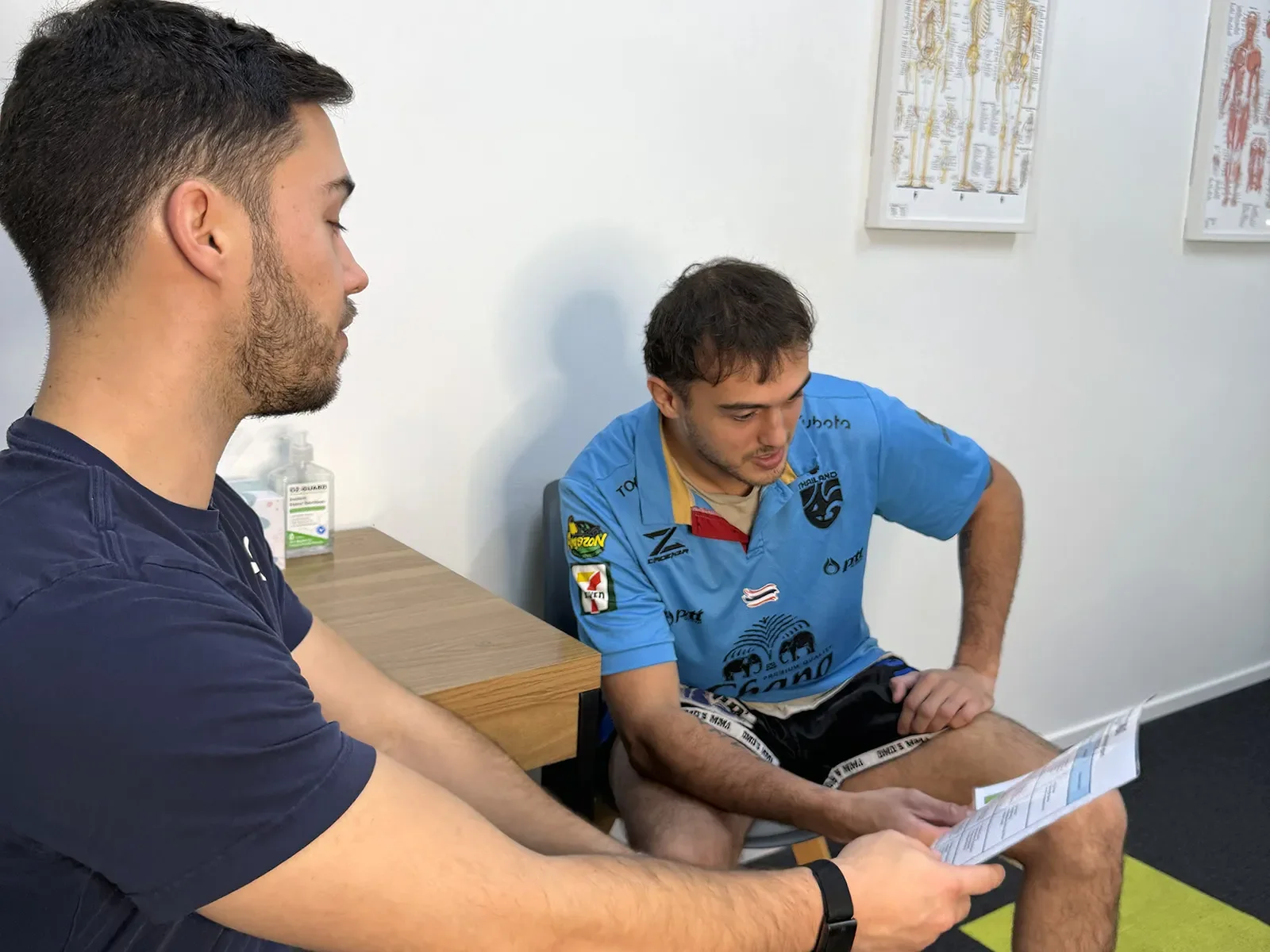
We work out exactly what is injured and measure it against the demands of your sport. You leave with a clear picture of the injury and a written plan.
Rebuild
We keep you training what is safe while we rebuild the strength and control the injured area needs. You stay in the gym instead of on the couch.
Return
Criteria-based steps back to full training, each one unlocked by hitting a benchmark rather than waiting out a fixed number of weeks.
Perform
Full training, plus the strength and conditioning that makes the injured area durable enough that the same problem does not keep coming back.
Read more about how the Combat Ready System works.
Managed properly, a lot of injuries do not need a long layoff. Knowing the next step, and the criteria you have to hit to earn it, is what keeps you in the gym.
How You Can Work With Us
There are two ways to get support:
In-clinic rehab, Moonee Ponds. One-on-one assessment, treatment, and a written plan for getting back to full training.
Online rehab. A structured plan, training modifications and ongoing support, wherever you are based.
If you train one sport primarily, start with the page for it: MMA physio, BJJ physio, Muay Thai physio, or boxing physio.
Not Sure What To Do With Your Injury?
If you’re currently dealing with something and not sure what to do next, start here:
Take the Injury Self-Assessment. Find out if you’re making your injury worse and what to do next
Download the 48-Hour Injury Reset Guide. Learn exactly what to do in the first 48 hours after injury
Related reading
How long do combat sports injuries take to heal?
Training with a combat sports injury: what’s safe and what makes it worse
Why "just rest" is the worst advice for combat athletes
If you are dealing with an injury and not sure what is safe to train, book an initial consult.
It’s a free 15-minute call, no cost and no obligation, to work out whether we are the right fit and what your next step should be.
This is the start of our journey. Combat sports rehab deserves a higher standard than it currently gets, and the plan is to set that benchmark here in Melbourne and push it worldwide from there.
If you train, we want you in the gym for a long time.
Tom Yeung, Physiotherapist