Concussion in Combat Sports: What It Is, Why Fighters Are at Risk, and What Recovery Looks Like
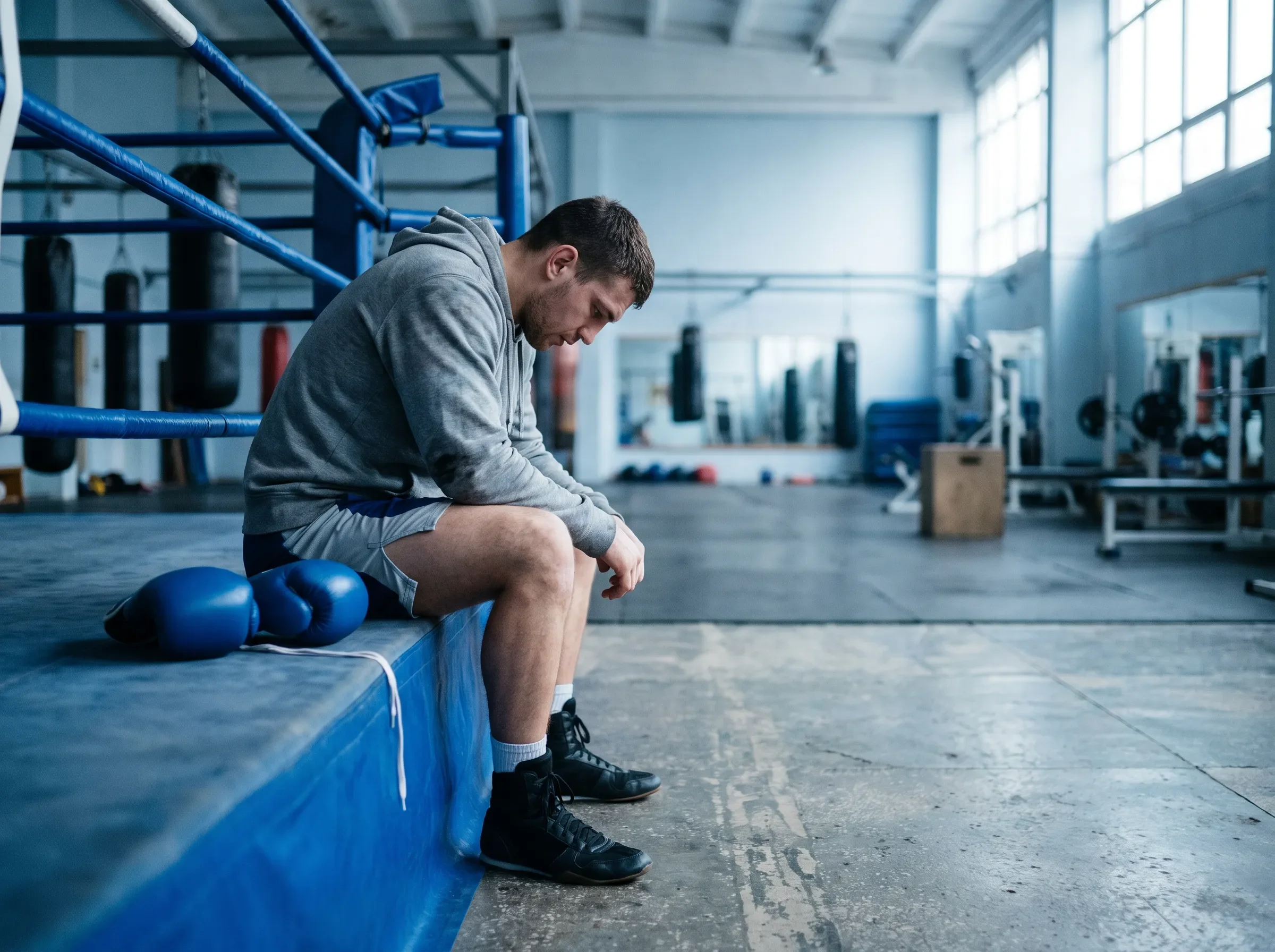
If you train or compete in a combat sport, head contact is part of the job. Boxing, MMA, Muay Thai and kickboxing all carry a real risk of concussion, and grappling carries more of it than most people assume.
Concussion is also the injury combat athletes are most likely to get wrong. There is no swelling to look at, standard scans usually come back clear, and the symptoms are easy to talk yourself out of on the drive home.
This guide covers what a concussion actually is, why combat sports carry more exposure than most activities, what to do in the moment, and what recovery involves.
Medical Disclaimer: The information in this blog is intended for general educational purposes only and does not constitute medical advice. It is not a substitute for professional assessment, diagnosis, or treatment by a qualified health practitioner. If you are experiencing pain, have sustained an injury, or are unsure whether it is safe to continue training, seek assessment from a qualified physiotherapist or medical professional.
What a concussion actually is
A concussion is a mild traumatic brain injury caused by force transmitted to the head. That force can arrive directly through a punch, elbow or knee, or indirectly through a whiplash-type movement where the head snaps around, such as taking a hook clean or landing hard on the canvas.
The brain moves inside the skull. That sudden acceleration and deceleration disturbs the way brain cells work.
The disturbance is functional rather than structural, which is why CT and MRI usually come back normal. Standard imaging is looking for bleeding and fractures. It is not designed to pick up a change in how brain cells are firing. A clear scan rules out the dangerous structural injuries, and it tells you nothing about whether you are concussed.
You also do not need to be knocked out. Most concussions happen with no loss of consciousness at all. Getting your bell rung, seeing stars, or feeling foggy after a hard exchange are all worth taking seriously.
Why combat athletes carry more exposure than most
Two things separate combat sports from almost every other activity.
Head contact is often the point rather than an accident, so exposure is deliberate, high and repeated week after week. And fighters are conditioned to push through discomfort, which is a strength in a hard round and a liability when the injury is to your brain.
A few things follow from that:
Repeated smaller impacts, the sub-concussive load from heavy sparring weeks, appear to matter over time as well as the single big knockout.
Returning to sparring while the brain is still recovering leaves you exposed to a second injury that can take considerably longer to settle.
Under-reporting is normal in gym culture, and an unreported concussion is an unmanaged one.
If in doubt, sit it out
Symptoms can arrive immediately or build over the following minutes and hours. They cluster into four groups.
Physical. Headache, pressure in the head, dizziness, nausea, balance problems, sensitivity to light or noise, blurred vision.
Thinking. Fogginess, feeling slowed down, trouble concentrating or remembering, a general sense of not being right.
Emotional. Irritability, feeling flat, feeling more emotional than usual, anxiety.
Sleep. Sleeping more or less than normal, or trouble getting to sleep.
If any of these show up after head contact, the session is over. No sparring again that day, and no letting a training partner talk you back in.
Some signs need emergency care rather than a wait-and-see approach. A headache that keeps getting worse, repeated vomiting, a seizure, weakness or numbness, slurred speech, unusual behaviour, or increasing drowsiness all mean an ambulance. Call 000.
What recovery involves
Australian guidance has moved a long way from the old advice to lie in a dark room until everything clears. The Concussion and Brain Health Position Statement 2024, developed by the Australian Institute of Sport with Sports Medicine Australia, the Australasian College of Sport and Exercise Physicians and the Australian Physiotherapy Association, describes most concussion symptoms as resolving on their own when the injury is managed appropriately, while noting that prolonged symptoms and increased susceptibility to further injury are both possible complications.
Managed appropriately, in practice, looks like this:
A short period of relative rest for the first day or two. Reducing physical and mental load rather than eliminating it.
A graded return to light activity that stays below the level where symptoms clearly worsen. Gentle movement helps.
A staged progression back through training, with each step earned by tolerating the one before it.
The timelines are longer than most fighters expect. Australian guidelines for community sport set a minimum of 14 days symptom-free before returning to contact training, and a minimum of 21 days before competitive contact.
If you are a registered contestant in Victoria, the numbers are longer again. The Professional Boxing and Combat Sports Board sets a minimum non-fight period of 30 days away from contact sparring and 37 days away from competition after a diagnosed or suspected concussion, with written medical clearance required before you go back to contact.
Where symptoms run longer than a few weeks, there are usually identifiable contributors: the neck, the balance and visual systems, and tolerance to exertion. Assessing those systems is a large part of what concussion rehabilitation involves.
The Combat Ready System
Assess
We work out what is driving your symptoms and screen the neck, balance and visual systems alongside them. You leave with a written plan and a clear next step.
Rebuild
Graded activity kept below the level that clearly worsens symptoms, plus treatment for any neck or vestibular contributors. You keep moving while the brain settles.
Return
Staged progression back through conditioning, technical work and contact, each stage earned by tolerating the one before it. Contact stages only after clearance.
Perform
Full training, with neck and conditioning work built back into your week.
Tom Yeung is an AHPRA-registered physiotherapist and APA member who has completed the Complete Concussions Physical Rehab Course, a 28-hour clinical training programme covering concussion assessment, cervical, vestibular and oculomotor rehabilitation, and staged return to sport. He is a certified provider of NeuroLogic Concussion Software.
Combat Sports Consulting works with BJJ, MMA, Muay Thai and boxing athletes in-clinic in Moonee Ponds, Melbourne, and online across Australia. If you want to see how rehab is structured sport by sport, start at the combat sports physio hub, or read how head contact fits into MMA injury rehab.
Common questions
Do I need a referral to see a physio for a combat sports injury?
No. Physiotherapists are first-contact practitioners in Australia, so you can book directly without a GP referral. You only need one if you are claiming through a Medicare care plan, DVA, or a workplace scheme.
Can a scan tell me whether I have a concussion?
No. CT and MRI look for structural damage such as bleeding or a fracture, and they are usually normal after a concussion. Diagnosis is clinical, based on the mechanism of injury, your symptoms and an examination. A clear scan is reassuring about the dangerous structural injuries, and it does not clear you to train.
How long before I can spar again after a concussion?
Longer than most people expect, and it depends on the stage you are at rather than the days on the calendar. Australian community sport guidance sets 14 days symptom-free before contact training and a minimum of 21 days before competitive contact. Registered contestants in Victoria sit under longer minimums again, set by the Professional Boxing and Combat Sports Board, and need written medical clearance before returning to contact.
Can I keep training while I recover from a concussion?
Some activity, yes. Current guidance supports light aerobic work early rather than complete rest. Anything carrying a risk of head contact is out until you are symptom-free and cleared, which means no sparring, no live grappling, and no drilling where you can catch a stray shot, even if the rest of your body feels fine.
What if I have had more than one concussion?
Repeat concussions generally warrant a more cautious approach, and stand-down periods increase with successive injuries under the Victorian rules. It is worth having your history looked at properly rather than treating each one as an isolated event.
Related reading
If you have taken a knock to the head and you are not sure how to handle it, book an initial consult. It is a free 15-minute call, no cost and no obligation, to work out whether we are the right fit and what your next step should be.
Not in Melbourne? Online injury rehab runs Australia-wide.