How long before you can spar after a concussion: the Australian rules
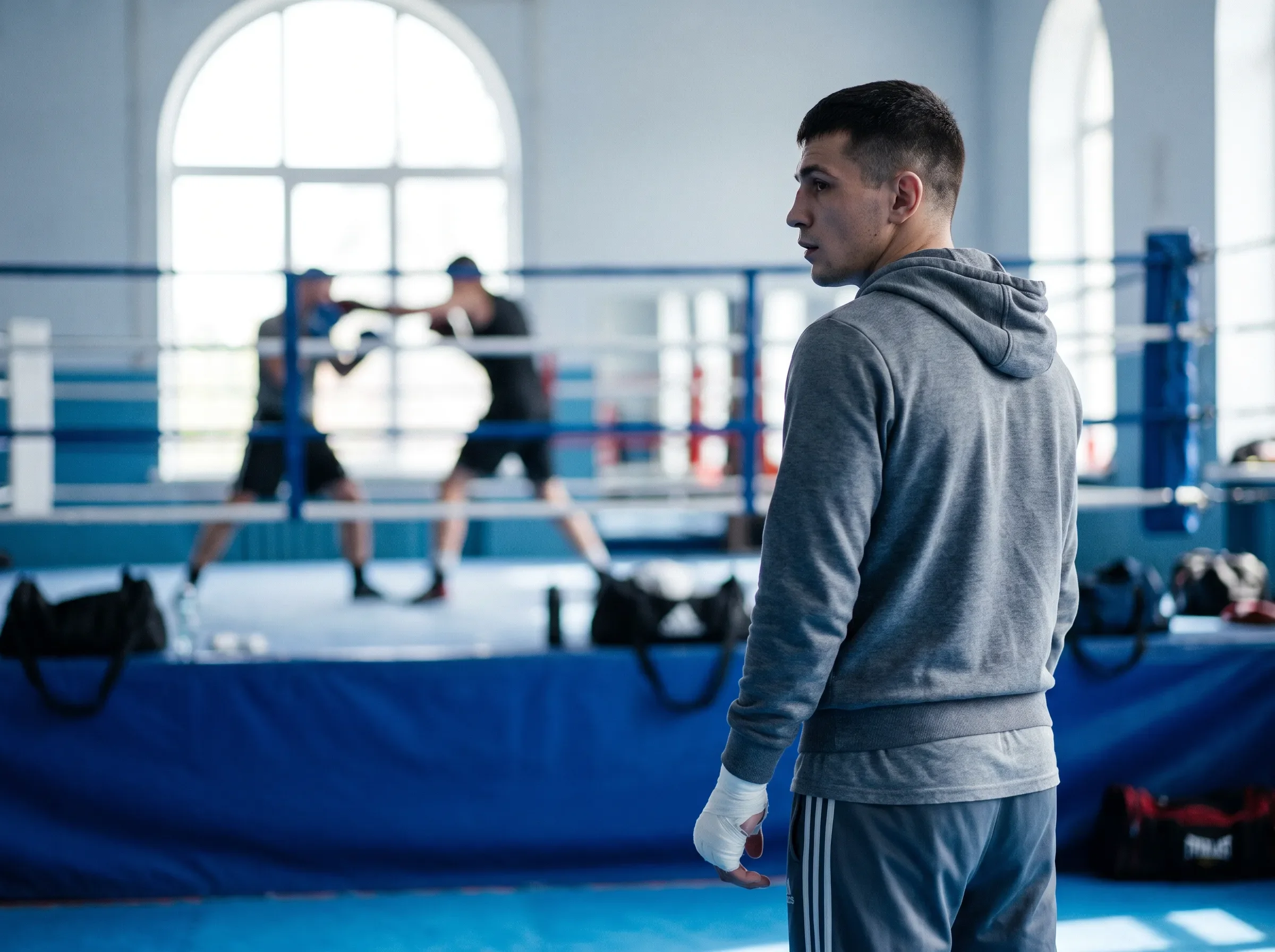
The question every fighter asks after a knock is the same. How long until I can spar again?
Most answers you will find online are the six-stage return-to-sport protocol, which tells you the order things happen in and nothing about the calendar. In Australia there is an actual calendar, and depending on how you compete it is set by a regulator rather than by your physio, your coach or you.
Here is what the minimum stand-down periods are, who they apply to, and who has to sign you off before contact goes back in.
Medical Disclaimer: The information in this blog is intended for general educational purposes only and does not constitute medical advice. It is not a substitute for professional assessment, diagnosis, or treatment by a qualified health practitioner. If you are experiencing pain, have sustained an injury, or are unsure whether it is safe to continue training, seek assessment from a qualified physiotherapist or medical professional.
Head injury is handled differently
Most of what we write on this site argues against sitting still. With a knee, a shoulder or a rib, there is almost always something useful you can train while the injured structure recovers.
Head injury narrows that answer. The tissue you are protecting is your brain, the damage does not show on a scan, and the main risk is taking a second impact while the first one is still settling.
Light aerobic work and non-contact skill work come back reasonably early. Anything where you might catch a shot stays out until you are symptom-free and cleared. That includes live rolling, positional sparring, and drilling next to a live pad round where a stray elbow can find you.
How long you actually have to sit out
Two sets of minimums apply in Australia. Which one is yours depends on whether you are registered to compete professionally.
If you train, or compete at community and amateur level. The Concussion and Brain Health Position Statement 2024, developed by the Australian Institute of Sport with Sports Medicine Australia, the Australasian College of Sport and Exercise Physicians and the Australian Physiotherapy Association, sets a minimum of 14 days symptom-free at rest before returning to contact training, and a minimum of 21 days before competitive contact. Around 30 Australian sports have adopted it.
If you are a registered contestant in Victoria. The Professional Boxing and Combat Sports Board applies its own minimum non-fight periods. After a diagnosed or suspected concussion, that is at least 30 days away from contact sparring and at least 37 days away from competition. Successive concussions increase the period. The Board publishes graduated return protocols running 37, 60 and 90 days depending on severity.
Your sport's governing body may set its own minimum on top of these.Boxing Australia runs its own concussion framework, and a concussed athlete has to complete four medical clearance forms before being cleared back into a fight or tournament. Muay Thai, MMA and grappling bodies each set their own requirements. Check yours before you start counting days, because the longest applicable minimum is the one that governs you.
All of these are floors. Being symptom-free earlier does not shorten them, and the clock does not start on the day you feel better.
Who signs off before you spar
For a registered Victorian contestant, the Board requires a completed concussion referral and clearance form before return to contact training or sparring, and return to competition is contingent on specialist medical clearance. That clearance comes from a doctor.
A physiotherapist has a defined role in assessing and managing concussion, and the 2024 position statement expanded it. Signing the Board's form is not part of that role. Build a doctor into your timeline early rather than finding out about the requirement the week of the fight.
If you train without competing, there is no form and no board. The call on when contact goes back in is a clinical one, made between you and whoever is managing your recovery.
Why the minimums exist
After a concussion the brain goes through a period where it is more vulnerable than usual. Taking another significant impact inside that window can extend recovery considerably, and in rare cases causes something far more serious.
Which is why "I feel fine now" does not get you cleared on its own. Symptoms clearing is the first checkpoint, and the stand-down period runs over the top of everything that follows it.
What happens during the wait
You do not spend the month sitting still. Concussion management uses a graded, step-by-step return: symptom-limited daily activity, then light aerobic work, then sport-specific exercise like bag work and footwork, then non-contact drilling, then full-contact practice after clearance, then competition. You spend a minimum of 24 hours at each stage and move up only when that level does not bring symptoms back. If symptoms return, you drop a stage and try again later.
That 24-hour minimum is a floor for each step, and it does not mean you progress daily. The early stages often begin within a few days. The contact stages are capped by the stand-down periods above regardless of how well the earlier stages went. We have covered how the staged protocol works in detail in MMA concussion: when can I return to sparring?
The rules that keep you on track
Never return to sparring on the same day as a suspected concussion.
Be symptom-free at rest and under exertion before any contact stage.
Know which stand-down period applies to you before you start counting.
Know who has to sign the clearance, and book that appointment early.
If symptoms come back at any stage, step back down. Progress is rarely linear, and that is normal.
Be honest about symptoms. Under-reporting to get back faster is the most common way fighters get hurt twice.
Where a concussion physio fits in
A concussion-trained physiotherapist works through the middle of this process. That means testing your tolerance to exertion through the stages rather than guessing at it, treating the contributors that hold recovery up such as the neck and the balance system, and progressing you against criteria you can see rather than on feel alone.
What comes out of that is a structured progression with a written record behind it. That record is also what a doctor wants in front of them when the clearance conversation happens.
Tom Yeung is an AHPRA-registered physiotherapist and APA member who has completed the Complete Concussions Physical Rehab Course, a 28-hour clinical training programme covering concussion assessment, cervical, vestibular and oculomotor rehabilitation, and staged return to sport. He is a certified provider of NeuroLogic Concussion Software.
Combat Sports Consulting works with BJJ, MMA, Muay Thai and boxing athletes in-clinic in Moonee Ponds, Melbourne, and online across Australia. If you want to see how rehab is structured sport by sport, start at the combat sports physio hub, or read how head contact fits into boxing injury rehab.
Common questions
Do I need a referral to see a physio for a combat sports injury?
No. Physiotherapists are first-contact practitioners in Australia, so you can book directly without a GP referral. You only need one if you are claiming through a Medicare care plan, DVA, or a workplace scheme.
Do the same timelines apply if I train but never compete?
The national minimums do. Australian guidance sets 14 days symptom-free before returning to contact training regardless of whether you compete, and sparring counts as contact training. The Victorian Board's non-fight periods only apply to registered contestants, because they attach to your registration rather than to the injury. If you compete under a national body such as Boxing Australia, their framework applies as well, and it carries its own clearance paperwork.
Does the stand-down clock start from the injury or from when symptoms clear?
The regulatory minimums run from the injury or the bout. The symptom-free requirements run from the day your symptoms settle. They are two separate conditions and you have to satisfy both, so whichever finishes later is the one that governs your return.
Who has to clear me before I go back to full-contact sparring?
If you are a registered contestant in Victoria, a doctor, using the Board's concussion referral and clearance form, which has to be provided to the Board before you return to contact training or sparring. If you are not registered, there is no form, and the decision sits with the practitioner managing your recovery.
What happens if symptoms come back partway through the stages?
You step back to the previous stage, settle there, and progress again when that level is tolerated. It is a normal part of the process rather than a sign that something has gone wrong, though repeated setbacks at the same stage are worth investigating properly.
Related reading
Concussion in combat sports: what it is, why fighters are at risk, and what recovery involves
Training with a combat sports injury: what is safe and what makes it worse
If you have had a knock to the head and you want a clear picture of where you sit in the process, book an initial consult. It is a free 15-minute call, no cost and no obligation, to work out whether we are the right fit and what your next step should be.
Not in Melbourne?Online injury rehabruns Australia-wide.